
What's Happening?
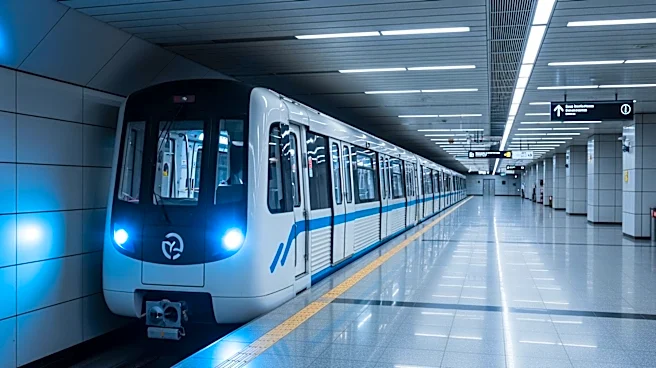
The Los Angeles Metro's D Line extension, which runs through some of the city's densest areas and notable landmarks, is set to open with new stations at Wilshire/La Brea, Wilshire/Fairfax, and Wilshire/La Cienega.
Despite its strategic location, experts express concerns about the challenge of encouraging Angelenos to switch from cars to mass transit. The success of the line is expected to depend on its convenience, reliability, and the relative inconvenience of driving alternatives. The Metro aims to make the D Line a preferred commuting option by offering frequent service and reducing travel times compared to driving. However, issues such as long wait times during off-peak hours and the need for additional incentives like congestion pricing are highlighted as potential barriers to widespread adoption.
Why It's Important?
The expansion of the D Line is a significant step in Los Angeles' efforts to enhance its public transportation infrastructure and reduce car dependency. Success in attracting riders could lead to reduced traffic congestion, lower emissions, and a shift in urban mobility patterns. The project also represents a broader push towards sustainable urban development and could set a precedent for future transit projects in car-centric cities. However, failure to attract sufficient ridership could undermine these goals and result in financial challenges for the Metro. The outcome of this initiative could influence public policy and investment in mass transit systems across the U.S.
What's Next?
As the D Line extension opens, Metro plans to monitor ridership levels and gather feedback to improve service. Potential next steps include exploring congestion pricing to make driving less attractive and further integrating the rail network with other transit options. The Metro may also consider increasing service frequency during off-peak hours if demand justifies it. Stakeholders, including city officials and transportation experts, will likely continue to advocate for policies that support public transit use and address safety concerns to enhance the appeal of the Metro system.