



What's Happening?
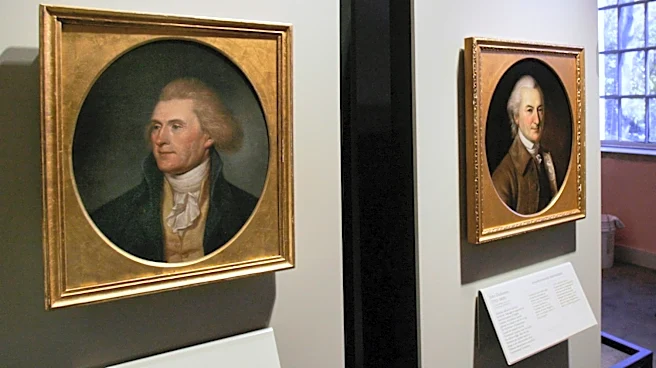
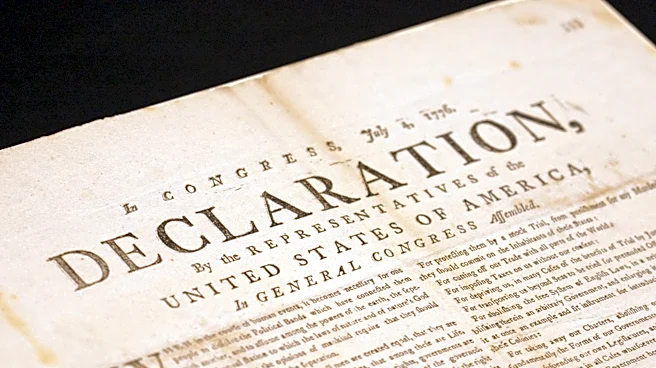
John Dickinson, a prominent figure during the American Revolution, is often remembered as the man who did not sign the Declaration of Independence. Despite his significant contributions, such as authoring 'Letters From a Farmer in Pennsylvania' and helping
draft the Olive Branch Petition, Dickinson's legacy has been overshadowed by his abstention from signing the Declaration. Historian Jane Calvert has been working to revive interest in Dickinson's life and contributions, highlighting his concerns about the lack of legal protections for vulnerable Americans and his belief in a gradual approach to independence. Dickinson's reputation has suffered over time, often depicted as a passive figure in popular culture, despite his active role in the Pennsylvania and Delaware militias and his support for the U.S. Constitution.
Why It's Important?
Revisiting John Dickinson's legacy is crucial for understanding the complexities of the American Revolution and the diverse perspectives of its leaders. Dickinson's cautious approach to independence and his emphasis on legal protections reflect a nuanced view that challenges the dominant narrative of the Revolution as a unanimous and straightforward quest for freedom. By acknowledging figures like Dickinson, historians and the public can gain a more comprehensive understanding of the founding of the United States, recognizing the debates and disagreements that shaped the nation's early years. This reevaluation also highlights the importance of protecting minority rights and considering the long-term implications of political decisions.
What's Next?
Efforts to reassess John Dickinson's contributions may lead to a broader reexamination of other overlooked figures in American history. As scholars like Jane Calvert continue to publish research and promote projects like the John Dickinson Writings Project, there may be increased interest in exploring the diverse voices and perspectives that contributed to the founding of the United States. This could result in new educational materials, public discussions, and cultural representations that offer a more inclusive and accurate portrayal of the nation's history.
Beyond the Headlines
The renewed focus on John Dickinson's legacy also raises questions about how history is remembered and taught. The tendency to simplify historical narratives can obscure the complexities and contradictions inherent in any significant historical event. By bringing attention to figures like Dickinson, there is an opportunity to engage in deeper discussions about the values and principles that underpin American democracy, such as the balance between liberty and security, and the role of dissent in a healthy political system.