

What's Happening?
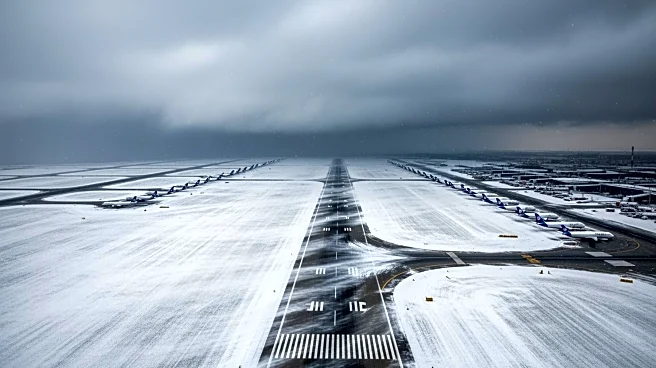
Delta Air Lines, along with several other major U.S. carriers, has been significantly impacted by a massive storm system sweeping across the United States, leading to widespread flight cancellations and delays. According to FlightAware data, Delta canceled
231 flights as part of over 1,800 cancellations nationwide. The storm has affected major airports, including Chicago O'Hare and New York's LaGuardia, causing the Federal Aviation Administration to impose ground stops and delays. The disruptions coincide with the busy spring break travel season, leaving many travelers scrambling for alternative arrangements. The storm has brought blizzard conditions to the Midwest and severe weather threats to the East Coast, further complicating air travel.
Why It's Important?
The flight cancellations and delays have significant implications for the U.S. travel industry, particularly during the peak spring break season. The disruptions not only affect airlines' operational efficiency and revenue but also impact travelers' plans, potentially leading to increased customer dissatisfaction and financial losses. The storm's impact on major hubs like Chicago and New York can cause a ripple effect across the national air travel network, highlighting the vulnerability of the aviation industry to severe weather events. This situation underscores the need for robust contingency planning and infrastructure resilience to mitigate the effects of such disruptions.
What's Next?
As the storm continues to move across the country, further cancellations and delays are anticipated. The Federal Aviation Administration may implement additional ground stops and delay programs at major airports, depending on the storm's progression. Airlines will need to manage customer service challenges and rebooking efforts to accommodate affected passengers. The travel industry will closely monitor weather forecasts and adjust operations accordingly to minimize further disruptions. Long-term, airlines may need to reassess their strategies for handling severe weather events to improve resilience and customer satisfaction.