




What's Happening?
President Trump's administration is reportedly increasing contact with key figures in Moscow, even as the conflict in Ukraine persists and US-backed peace efforts remain stalled. Recent indicators of this renewed engagement include a visit to Moscow by
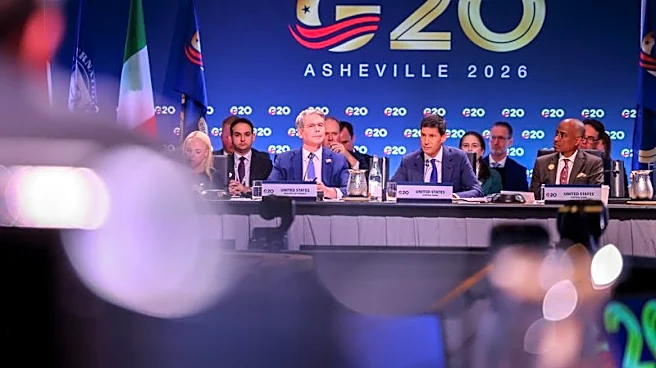
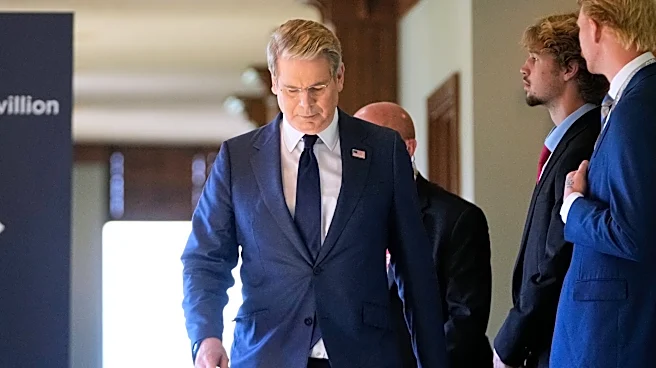
CIA Director John Ratcliffe and the unexpected presence of Russian Finance Minister Anton Siluanov at a Group of 20 meeting hosted by the US. Ukrainian President Volodymyr Zelenskyy confirmed discussions with US envoys Steve Witkoff and Jared Kushner regarding a potential visit to Ukraine and advancing the peace process. Despite these contacts, analysts caution that this does not necessarily signify a full restoration of US-Russian relations, as Washington continues to enforce sanctions against Moscow. The US Treasury Secretary Scott Bessent met with Siluanov on the sidelines of the G20 meeting, reiterating that no financial agreements or economic relief would be provided to Russia until the war concludes. The ongoing conflict sees Russia and Ukraine exchanging attacks, targeting energy infrastructure and engaging in intense battles in eastern Ukraine.
Why It's Important?
The increased engagement between the US and Russia carries significant implications for international relations and the ongoing conflict in Ukraine. While President Trump has expressed a desire to de-escalate tensions and end the war, the timing and nature of these contacts are viewed with alarm by some US allies. Critics suggest that treating Russia as a partner rather than an adversary could undermine the collective stance against Moscow's actions in Ukraine and potentially embolden Russia against NATO members. The re-establishment of high-level military-to-military talks, suspended before the full-scale invasion, further signals a shift in diplomatic approach. This could create divisions within the Western alliance, as evidenced by Polish Finance Minister Andrzej Domanski's dissatisfaction with Russia's presence at the G20 meeting and the EU economy chief Valdis Dombrovskis's stance against normalizing Moscow's participation. The perceived softening of the US position could also impact the effectiveness of sanctions and future peace negotiations, particularly given Russia's continued territorial demands.
What's Next?
The immediate future will likely see continued diplomatic maneuvering as the US administration navigates its engagement with Russia while attempting to advance peace in Ukraine. Ukrainian President Zelenskyy's discussions with US envoys suggest ongoing efforts to facilitate a visit and push for a diplomatic resolution, though significant breakthroughs remain elusive due to entrenched territorial disputes. Reactions from European allies will be crucial, as any perceived normalization of relations with Russia could lead to further strain within NATO and the broader international coalition supporting Ukraine. The US will likely face pressure to clarify its diplomatic strategy to reassure allies and maintain a united front against Russian aggression. Further high-level meetings or intelligence exchanges between the US and Russia could occur, potentially shaping the trajectory of the conflict and future geopolitical alignments. The effectiveness of these diplomatic overtures will ultimately be measured by their impact on the ground in Ukraine and the willingness of both sides to compromise.
Beyond the Headlines
The renewed US-Russia dialogue extends beyond immediate conflict resolution, touching upon deeper geopolitical shifts and the future of international security architecture. The willingness of President Trump's administration to engage with Moscow, despite ongoing hostilities, could signal a broader re-evaluation of US foreign policy priorities and alliances. This approach might be interpreted as a move towards a more transactional foreign policy, where direct engagement with adversaries is prioritized over traditional alliance-based diplomacy. Such a shift could have long-term consequences for the credibility of international institutions and collective security frameworks. Furthermore, the discussions around potential Russian attacks on NATO members, reportedly raised by CIA Director Ratcliffe, highlight underlying anxieties about regional stability and the potential for escalation. The differing views among US allies on engaging with Russia underscore the complex ethical and strategic dilemmas inherent in managing international conflicts, particularly when core principles of sovereignty and territorial integrity are at stake.