







What's Happening?
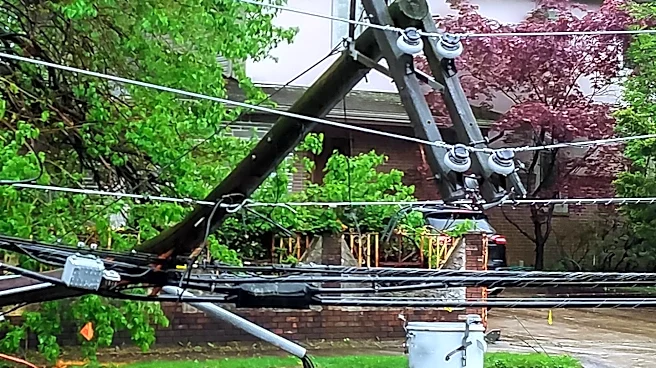
Residents and business owners in Lakewood, Ohio, confronted FirstEnergy representatives at a city hall hearing regarding a series of persistent power outages. The community expressed significant frustration over the outages, which have been a major issue
for years, escalating with seven major incidents in June and July. Speakers at the hearing, including Lakewood resident Ashley Drachenberg and Lauren Small from the Lakewood Chamber of Commerce, emphasized the substantial financial costs incurred by businesses due to lost sales, spoiled inventory, and interrupted operations. City officials cited findings from the Public Utilities Commission of Ohio (PUCO) indicating FirstEnergy's failure to maintain its infrastructure. FirstEnergy Vice President Sally Thomas acknowledged the company's shortcomings, stating, 'We have not lived up to your expectations or our own,' and admitted that the infrastructure in Lakewood is outdated and overburdened.
Why It's Important?
The ongoing power outages in Lakewood underscore a critical issue affecting local economies and the daily lives of residents. For businesses, the financial impact of unreliable power can be severe, leading to direct losses and long-term damage to customer trust and operational stability. The community's unified demand for accountability highlights the essential role of reliable utility services in maintaining economic vitality and public welfare. This situation reflects a broader challenge faced by many U.S. communities with aging infrastructure and the tension between utility companies' profit motives and their public service obligations. The public outcry and the utility's admission of fault could prompt more stringent regulatory oversight and increased investment in infrastructure, potentially influencing how other utility providers manage their assets and respond to community concerns.
What's Next?
FirstEnergy representatives at the hearing stated that 'more improvements are on the way' and that their focus is on investing in the electric system to enhance reliability and resilience. However, residents and council members, such as Angelina Hamilton Steiner, expressed skepticism, demanding consistent service without increased rates and accountability for past failures. Lakewood City Council President Sarah Kepple questioned why it has taken so long for FirstEnergy to develop comprehensive plans for its century-old infrastructure. The community's continued pressure, coupled with PUCO's ongoing monitoring, will likely push FirstEnergy to accelerate its promised upgrades and potentially explore interim solutions to mitigate outages during the long-term repair process. The effectiveness of FirstEnergy's future actions and the community's response will determine the path forward.
Beyond the Headlines
The confrontation in Lakewood reveals a deeper societal expectation for essential services to be reliable and for corporations to be transparent and accountable. The sentiment expressed by residents, such as 'do you want to have trust in the community? Pay the fines, fix the issues, do the research and don't needlessly raise our rates and take accountability,' points to a growing demand for corporate social responsibility. This situation also highlights the power dynamics between a large utility company and a local community, where collective action and public pressure become crucial tools for residents to advocate for their needs. The long-term implications could include a re-evaluation of regulatory frameworks to ensure utilities are not only penalized for failures but also proactively incentivized to maintain and upgrade critical infrastructure, preventing such crises from recurring in other areas.