




What's Happening?
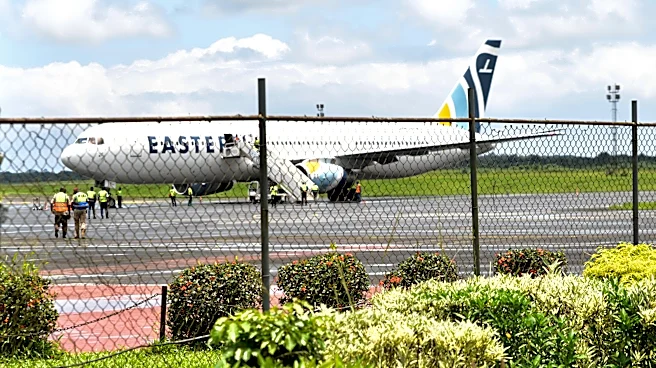
The United States has deported 20 individuals to Liberia, marking the initial phase of a new agreement under which Liberia will accept a total of 1,200 migrants from the U.S. This action took place on Thursday, with the deportees arriving in Liberia.
The agreement signifies a formal arrangement between the two nations regarding the repatriation of individuals. The specifics of the agreement, such as the criteria for deportation or the support provided to Liberia for accepting these individuals, were not detailed in the source. This development is part of broader U.S. efforts to manage migration and deportation processes, often involving agreements with other countries to facilitate the return of their citizens or individuals deemed eligible for deportation.
Why It's Important?
This deportation event and the underlying agreement are important for several reasons. For the United States, it represents a continuation of its immigration enforcement policies and its strategy to manage the population of individuals subject to deportation. By securing agreements with countries like Liberia, the U.S. can more effectively carry out deportations, which can have implications for its diplomatic relations and its domestic immigration debates. For Liberia, accepting 1,200 deportees from the U.S. could present significant social and economic challenges, including reintegration issues, potential strain on public services, and the need for employment opportunities for the returning individuals. The agreement also highlights the complex and often sensitive nature of international migration and the bilateral relationships formed to address it. The long-term impact on both countries will depend on the implementation of the agreement and the support mechanisms in place for the deportees.
What's Next?
Following this initial deportation, the United States is expected to continue sending the remaining individuals to Liberia as per the agreement, totaling 1,200 migrants. The process will likely involve ongoing coordination between U.S. and Liberian authorities to manage the logistics of these transfers. Liberia will face the task of integrating these individuals into its society, which may require humanitarian aid, social services, and economic support. The success or challenges encountered during this process could influence future migration agreements between the U.S. and other nations. International organizations and human rights groups will likely monitor the situation to ensure the humane treatment and successful reintegration of the deportees. The agreement's long-term implications for U.S. foreign policy and Liberia's development will unfold as more individuals are repatriated.
Beyond the Headlines
Beyond the immediate act of deportation, this agreement touches upon deeper ethical and humanitarian considerations. The return of a large number of individuals to a country like Liberia, which may have limited resources, raises questions about the responsibility of the deporting nation to ensure a smooth and sustainable reintegration process. There are also concerns about the potential impact on the deportees themselves, who may have spent significant portions of their lives in the U.S. and could face cultural, social, and economic challenges upon returning to a country they may barely know. This situation underscores the broader global debate on migration, national sovereignty, and human rights, highlighting the tension between a nation's right to control its borders and its ethical obligations towards individuals within its jurisdiction. The agreement could also set a precedent for how the U.S. handles similar situations with other countries, influencing international migration policies and practices.