


What's Happening?
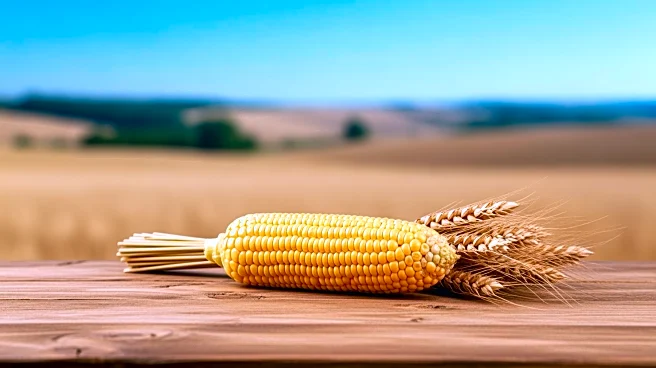
The U.S. House Committee on Agriculture has moved forward with the Farm, Food, and National Security Act of 2026, marking a significant step in the legislative process for the new farm bill. This development is crucial for providing policy certainty to
farmers and rural communities across the United States. Under the leadership of Chairman Glenn 'GT' Thompson, the committee's approval is seen as a pivotal moment for the agricultural sector. The Council of Producers & Distributors of Agrotechnology (CPDA) has expressed strong support for the bill, emphasizing its importance in supporting farmers and the agricultural supply chain. The bill includes provisions for risk management, conservation, research, and innovation, which are vital for maintaining crop productivity and achieving environmental goals. The legislation will now proceed to the U.S. House floor for further consideration.
Why It's Important?
The advancement of the Farm, Food, and National Security Act of 2026 is critical for the agricultural sector, which relies on stable and supportive policy frameworks. The bill's passage would provide much-needed certainty to farmers, enabling them to plan and invest in their operations with confidence. It also supports rural economies by ensuring access to modern crop protection technologies, which are essential for maintaining productivity and sustainability. The bill's progress reflects bipartisan efforts to address the needs of the agricultural community, highlighting the sector's role in the U.S. economy and its contribution to global food security. The CPDA's endorsement underscores the industry's reliance on legislative support to remain competitive and innovative.
What's Next?
Following the committee's approval, the Farm, Food, and National Security Act of 2026 will be considered by the full U.S. House of Representatives. If passed, it will move to the Senate for further deliberation. The bill's progress will be closely monitored by industry stakeholders, who are advocating for swift passage to avoid disruptions in the agricultural sector. The outcome will have significant implications for farmers, rural communities, and the broader agricultural supply chain, influencing policy decisions and investment strategies in the coming years.