






What's Happening?
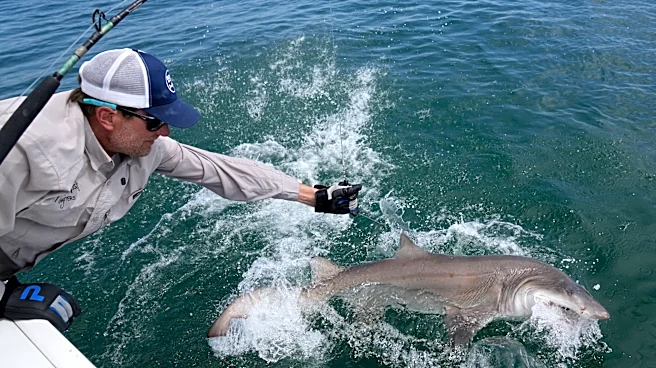
Shark researchers, including Greg Metzger, are actively catching, tagging, and releasing various shark species off the Hamptons in Long Island, New York. This initiative aims to understand local shark populations and shed light on a confirmed great white
shark nursery in the area. The research involves attaching data collection devices that track location, depth, and water temperature. These tags have shown that sharks can travel vast distances, with some being detected as far south as North Carolina, Georgia, Florida, and the Gulf of Mexico before returning to Long Island. Scientists are observing an increase in diverse shark species, such as spinner, blacktip, and bull sharks, migrating north to Long Island waters. This phenomenon is attributed to warming ocean temperatures, likely influenced by climate change. Despite increased sightings and recent non-fatal bites, the International Shark Attack File at the Florida Museum of Natural History reports no fatal shark attacks on Long Island. Local officials have responded by investing in safety measures, including shark-spotting drones.
Why It's Important?
The ongoing shark research off Long Island holds significant importance for marine conservation and public safety. The identification of a great white shark nursery highlights the region's critical role in the life cycle of these apex predators, which are essential for maintaining marine ecosystem balance. The observed northward migration of tropical shark species due to warming waters underscores the broader ecological impacts of climate change on marine biodiversity and distribution. This shift could lead to new interactions between humans and sharks, necessitating enhanced public awareness and safety protocols for beachgoers. Furthermore, the research challenges common misconceptions about sharks, aiming to educate the public that these animals are not 'mindless eating machines' but vital components of the ocean environment. Understanding these population dynamics and migratory patterns is crucial for developing effective conservation strategies and mitigating potential conflicts as human and shark habitats increasingly overlap.
What's Next?
Researchers will continue their tagging and monitoring efforts to gather more data on shark movements, population health, and the long-term effects of warming waters. This ongoing data collection will be crucial for refining scientific understanding and informing future conservation policies. Public education initiatives, like the interactive exhibit at the Bridgehampton museum, are expected to continue, aiming to foster a more informed perspective on sharks and their role in the ecosystem. Local authorities will likely maintain and potentially expand safety measures, such as shark-spotting drones, to ensure beachgoer safety as shark sightings continue. The scientific community will also be closely watching for further evidence of how climate change influences marine species distribution and the potential for new shark nurseries to emerge or existing ones to shift. Continued collaboration between researchers, local officials, and the public will be essential for adapting to these ecological changes.
Beyond the Headlines
Beyond the immediate concerns of public safety and scientific discovery, the increased presence of sharks off Long Island touches upon deeper ecological and cultural implications. The historical context of the novel "Jaws," set in a fictional Hamptons town, highlights a long-standing societal fear of sharks, which researchers are actively working to dispel through education. The rebound of white shark populations, partly due to conservation efforts, signifies a success story in marine conservation, demonstrating the effectiveness of protecting apex predators. However, it also brings to the forefront the delicate balance between human recreational activities and wildlife preservation. The warming waters, a symptom of climate change, serve as a stark reminder of humanity's impact on the natural world and the cascading effects on ecosystems. This situation prompts a reevaluation of our relationship with the ocean, urging a shift from fear-driven narratives to one of respect, understanding, and co-existence with marine life.