





What's Happening?
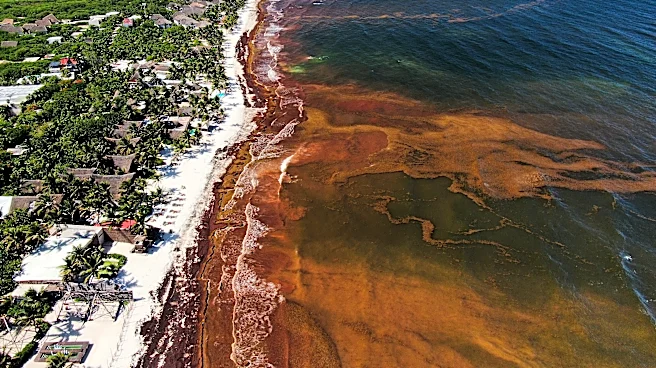
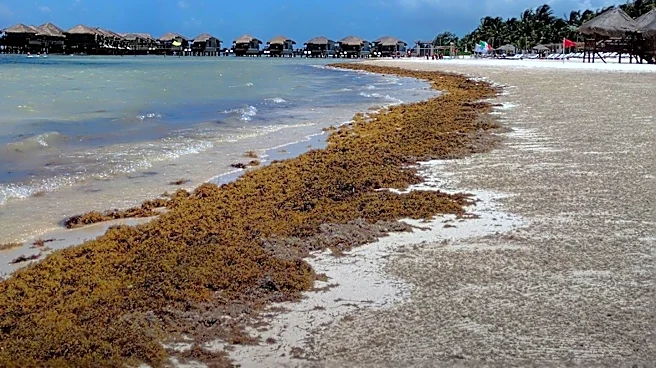
A significant environmental issue is unfolding as vast amounts of sargassum seaweed blanket the beaches and coastlines of the Caribbean and Gulf of Mexico. According to a report by the University of South Florida's Optical Oceanography Lab, approximately
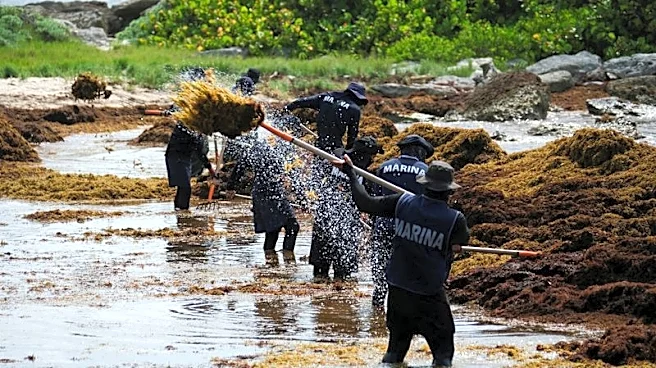
27 million metric tons of this seaweed were recorded in the Atlantic, Caribbean, and Gulf of Mexico in July. The sargassum, which releases a foul odor as it decomposes onshore, is causing significant problems for local ecosystems and tourism-dependent economies. The seaweed reduces oxygen levels in the water, smothers mangrove roots, and blocks sunlight from reaching coral and sea grass. This situation is exacerbated by the use of heavy machinery to remove the seaweed, which risks destroying fragile turtle nests. The phenomenon, known as the Great Atlantic Sargassum Belt, has been growing since 2011, with factors such as agricultural runoff, warming waters, and changes in wind and current patterns contributing to its expansion.
Why It's Important?
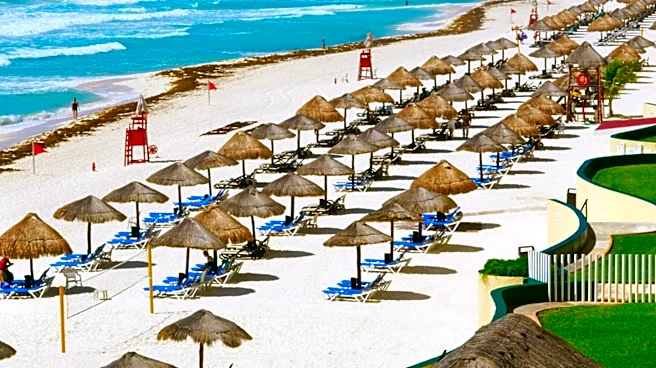
The invasion of sargassum poses a severe threat to both the environment and the economy in affected regions. The seaweed's presence disrupts marine life, particularly impacting species like sea turtles, which struggle to reach the ocean due to the dense mats of sargassum. Economically, the tourism industry, a vital source of income for many Caribbean and Gulf regions, is at risk as the unsightly and odorous seaweed deters visitors. The situation highlights the broader implications of climate change and environmental mismanagement, as factors like warming ocean temperatures and agricultural runoff exacerbate the problem. The ongoing struggle to manage and mitigate the impact of sargassum underscores the need for sustainable environmental practices and policies.
What's Next?
Efforts to address the sargassum problem are likely to continue, with governments and environmental organizations seeking sustainable solutions to manage the seaweed influx. This may involve developing new methods for safely removing sargassum without harming local wildlife or exploring ways to repurpose the seaweed for commercial use. Additionally, there may be increased pressure on policymakers to address the root causes of the problem, such as reducing agricultural runoff and implementing measures to combat climate change. The situation could also prompt further research into the ecological impacts of sargassum and the development of innovative strategies to protect vulnerable coastal ecosystems.
Beyond the Headlines
The sargassum invasion raises important questions about the long-term sustainability of coastal tourism and the resilience of marine ecosystems in the face of environmental change. It highlights the interconnectedness of global environmental issues, as actions taken in one part of the world, such as agricultural practices, can have far-reaching impacts on distant ecosystems. The situation also underscores the importance of international cooperation in addressing environmental challenges, as the sargassum belt spans multiple countries and regions. As the problem persists, it may drive greater awareness and advocacy for environmental conservation and climate action.