




What's Happening?
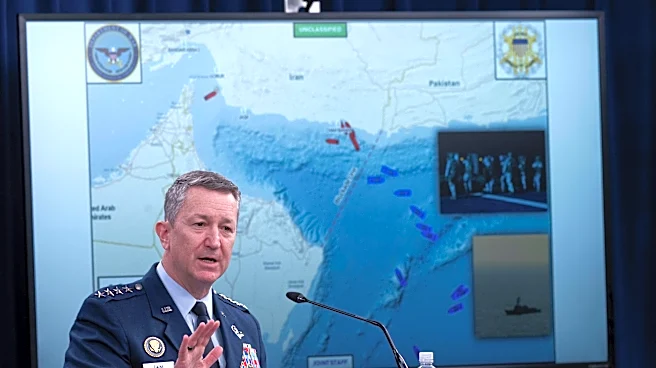
Iran has been deploying one-way attack drones across the Middle East, targeting various countries including Bahrain, Kuwait, and the United Arab Emirates. These drones have also damaged the United States Embassy in Saudi Arabia and killed U.S. service
members. The drones, which are relatively inexpensive compared to traditional cruise missiles, have overwhelmed air defense systems due to their sheer numbers. This development highlights the growing use of advanced drone technology in modern warfare, with Iran's battlefield record demonstrating the effectiveness of precise mass attacks.
Why It's Important?
The use of one-way attack drones by Iran signifies a shift in military strategy, where precision and mass are combined to achieve significant impact. This poses a challenge to traditional air defense systems, which can be overwhelmed by the sheer number of drones. For the U.S. military, this development underscores the need to invest in counter-drone technologies and strategies to protect its assets and personnel in the region. The democratization of drone technology means that even mid-tier militaries can pose significant threats, altering the balance of power in conflict zones.
What's Next?
As Iran continues to deploy these drones, the U.S. military may need to enhance its air defense capabilities and develop new strategies to counter drone swarms. This could involve increased investment in electronic warfare and anti-drone systems. Additionally, diplomatic efforts may be necessary to address the broader implications of drone warfare in the Middle East, potentially involving negotiations or sanctions to curb Iran's drone capabilities.
Beyond the Headlines
The proliferation of drone technology raises ethical and legal questions about the conduct of warfare. The ability to launch precise attacks remotely could lead to increased civilian casualties and complicate accountability in conflict zones. Furthermore, the use of drones for propaganda purposes, as seen with Iran's release of attack footage, highlights the psychological dimension of modern warfare, where public perception can be influenced through media.