
What's Happening?
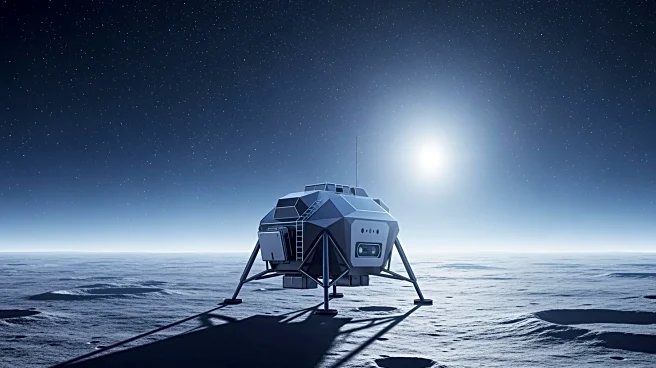
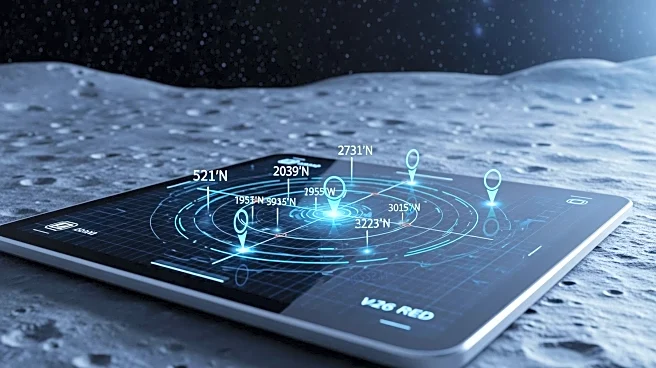
A novel machine learning algorithm, YOLO-ETA, has been used to identify the possible landing site of the Luna 9 spacecraft on the Moon. The algorithm was trained using images from the Lunar Reconnaissance Orbiter Camera (LROC) and successfully detected
candidate artificial objects, including a prominent feature near the suspected landing coordinates. This marks the first time automated high-confidence identifications of spacecraft hardware have been made within LROC images, demonstrating the potential of machine learning for space exploration.
Why It's Important?
The use of machine learning in identifying lunar landing sites represents a significant advancement in space exploration technology. It allows for more efficient analysis of vast datasets, reducing the need for manual inspection and enabling the discovery of previously unidentified features. This technology could be applied to future missions, aiding in the exploration of other celestial bodies and enhancing our understanding of the solar system. Additionally, it highlights the growing role of AI and machine learning in scientific research and exploration.
What's Next?
The success of YOLO-ETA in identifying the Luna 9 landing site may lead to its application in other areas of space exploration, such as identifying landing sites for future missions or detecting other types of extraterrestrial artifacts. Researchers may also refine the algorithm to improve its accuracy and expand its capabilities. As machine learning continues to evolve, it is likely to play an increasingly important role in space exploration and other scientific fields.