







What's Happening?
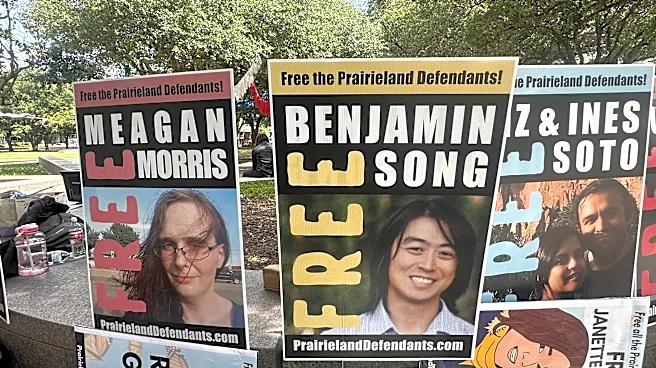
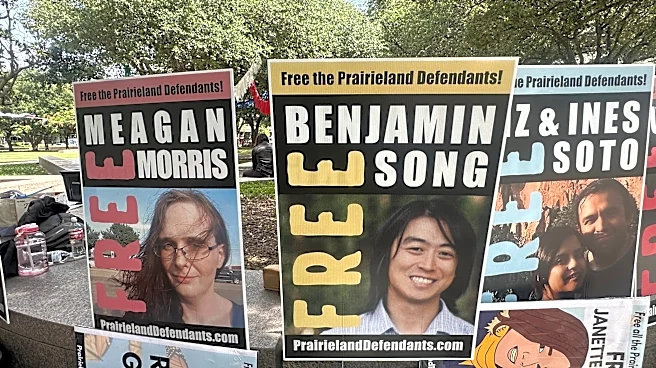
Eight activists associated with an antifa cell have been sentenced to lengthy prison terms for their involvement in a violent attack on the Prairieland Detention Center in Texas. The attack, which occurred on July 4, resulted in a police officer being
shot. Benjamin Song, who shot the officer, received a 100-year sentence. Other defendants received sentences ranging from 30 to 70 years. The group was convicted of multiple charges, including attempted murder and providing material support to terrorists. The attack involved the use of firearms and fireworks, and the facility was vandalized with graffiti. The sentencing follows President Trump's 2025 designation of antifa as a major terrorist organization.
Why It's Important?
The sentencing underscores the U.S. government's commitment to addressing domestic terrorism and violence against law enforcement. The harsh penalties reflect a broader crackdown on groups perceived as threats to national security. This case highlights the ongoing tensions between law enforcement and activist groups, particularly those associated with antifa. The sentences may serve as a deterrent to similar acts of violence and could influence future policy decisions regarding domestic terrorism. The case also raises questions about the balance between protest rights and public safety.
What's Next?
The sentencing of a ninth individual involved in the attack is scheduled for July 1. The FBI and other law enforcement agencies are expected to continue their efforts to dismantle antifa networks and prevent future attacks. The case may prompt further legislative and policy discussions on how to effectively address domestic terrorism while respecting civil liberties. Community and civil rights groups may respond to the sentences, potentially leading to further protests or legal challenges.
Beyond the Headlines
The case highlights the complexities of defining and prosecuting domestic terrorism, particularly with decentralized movements like antifa. It raises ethical questions about the use of harsh sentences as a deterrent and the potential for such measures to infringe on civil liberties. The case may also influence public perceptions of protest movements and their legitimacy, potentially affecting future activism and law enforcement responses.