
What's Happening?
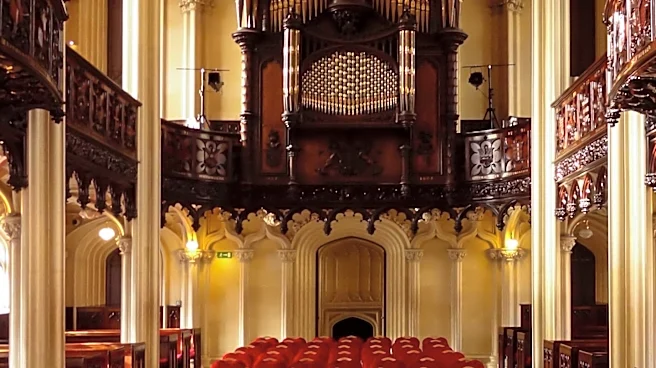
In Halberstadt, Germany, the John Cage Organ Project marked its 17th chord change in a performance of Cage's composition 'ORGAN²/ASLSP (As Slow as Possible)'. This project, which began in 2001, is set to last 639 years, concluding in 2640. The recent
chord change involved adding an eighth pipe to the organ, altering the sound in the medieval Burchardi Church. The project is a tribute to Cage's avant-garde approach to music, emphasizing extreme slowness and quietness. The event attracted over 150 attendees inside the church, with more observing outside. The project has transformed the church, which was largely in ruins before the initiative began.
Why It's Important?
The John Cage Organ Project is a unique cultural endeavor that challenges conventional perceptions of time and music. It serves as a reminder of the enduring impact of Cage's work and the potential for art to transcend generations. The project also highlights the importance of preserving historical sites, as the Burchardi Church has been restored to accommodate this long-term performance. This initiative encourages reflection on the legacy of art and the role of current generations as custodians of cultural heritage. It also poses questions about the future of music and how it can be experienced over extended periods.
What's Next?
The next chord change is scheduled for October 5, 2027, when a pipe will be removed, altering the sound once again. This ongoing project requires continuous support from musicians, volunteers, and craftsmen to ensure its longevity. The project's timeline encourages long-term thinking and planning, as it will outlast the lives of its current caretakers. The sale of hereditary tickets for the final performance in 2640 indicates a commitment to maintaining interest and engagement with the project over the centuries.
Beyond the Headlines
The John Cage Organ Project invites philosophical contemplation about the nature of time, art, and human legacy. It challenges participants and observers to consider their place in a timeline that extends far beyond their lifetimes. The project also raises questions about the sustainability of cultural projects and the resources required to maintain them over such an extended period. It serves as a metaphor for the slow, deliberate progress of art and culture, contrasting with the rapid pace of modern life.