



What's Happening?
NASA successfully conducted a hot fire test of RS-25 engine No. 10001 on November 18 at the Fred Haise Test Stand at NASA’s Stennis Space Center in Mississippi. The developmental engine was fired for its planned duration of three minutes and 20 seconds
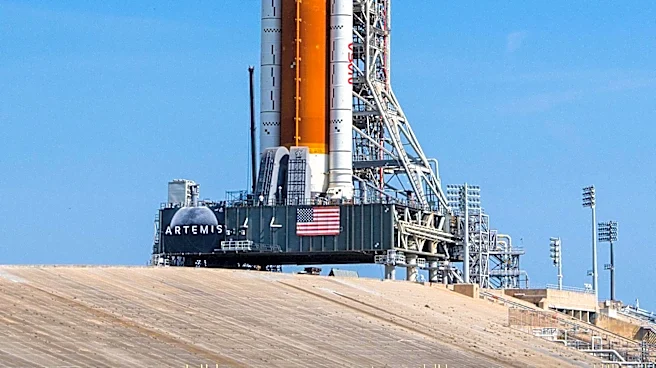
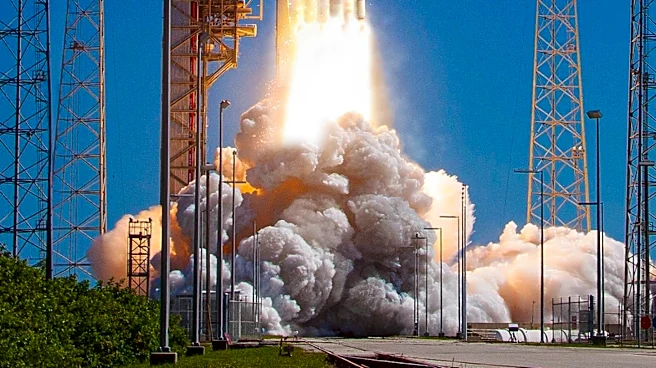
(200 seconds). Although this specific engine will not be used in flight, the test is crucial for gathering critical data. This data will be used by NASA and its prime contractor, L3Harris Technologies, to improve the performance and reliability of RS-25 engines for upcoming Artemis missions. These engines are vital for the Space Launch System (SLS) rocket, which will launch astronauts aboard the Orion spacecraft from NASA’s Kennedy Space Center in Florida. For each Artemis mission, four RS-25 engines collectively produce up to 2 million pounds of thrust to propel the SLS rocket.
Why It's Important?
The RS-25 engine test is a critical step in ensuring the success and safety of NASA's Artemis program, which aims to return humans to the Moon and eventually send them to Mars. The data collected from this developmental test allows engineers to refine engine design, materials, and operational procedures, directly contributing to the reliability and efficiency of the SLS rocket. Enhanced engine performance and reliability are paramount for crewed missions, where any failure could have catastrophic consequences. By continuously testing and improving these engines, NASA is building a robust and dependable launch system capable of supporting complex deep-space missions. This ongoing development is essential for achieving the ambitious goals of exploring the lunar South Pole, establishing a sustained human presence on the lunar surface, and laying the groundwork for the first crewed mission to Mars.
What's Next?
The data collected from this RS-25 engine test will be thoroughly analyzed by NASA and L3Harris Technologies engineers to identify areas for improvement in engine performance and reliability. This iterative testing and analysis process will continue as NASA prepares for future Artemis missions. The Artemis IV Moon landing mission, scheduled for 2028, will be a significant milestone, utilizing these refined engines to launch astronauts. Further tests of RS-25 engines will be conducted at NASA Stennis to ensure all flight engines are proven flightworthy before integration into the SLS rocket. The continuous development and testing cycle is integral to the long-term success of the Artemis program and its objectives of deep space exploration.
Beyond the Headlines
Beyond the immediate technical improvements, the RS-25 engine testing program represents a broader commitment to pushing the boundaries of aerospace engineering and ensuring national leadership in space exploration. The meticulous process of testing and refining these powerful engines fosters innovation in propulsion technology, which can have spillover benefits for other sectors, including commercial spaceflight and defense. The collaboration between NASA and private contractors like L3Harris Technologies also highlights the public-private partnerships that are driving the new era of space exploration. Furthermore, the development of such high-performance engines contributes to maintaining a skilled workforce in advanced manufacturing and engineering, reinforcing the U.S.'s technological base. The success of these engine tests is not just about launching rockets; it's about sustaining a national capability for ambitious scientific and exploratory endeavors.