





What's Happening?
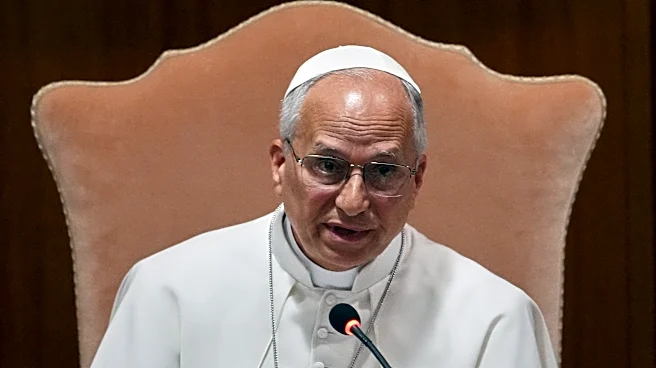
Pope Leo XIV has released his first major theological document, warning about the control of artificial intelligence (AI) and its potential to fuel global conflicts. The encyclical, titled 'Magnifica Humanitas,' calls for AI to be subject to rigorous
ethical constraints and emphasizes the need to protect human dignity amid technological advancements. The pope critiques the 'just war' theory, suggesting military force should only be used for strict self-defense. He also highlights the importance of social justice, particularly in the treatment of migrants and refugees, and calls for a fair distribution of resources and robust legal frameworks to govern AI.
Why It's Important?
The encyclical addresses the ethical and social implications of AI, a rapidly advancing technology with significant global impact. By highlighting the potential for AI to exacerbate conflicts, Pope Leo XIV is urging global leaders to consider the moral dimensions of technological development. This document could influence international policy discussions on AI regulation and ethical standards. It also underscores the Catholic Church's role in engaging with contemporary issues, offering a moral framework for addressing the challenges posed by AI and other emerging technologies.
What's Next?
The Vatican's stance on AI may prompt further dialogue among religious, political, and technological leaders about the ethical use of AI. The encyclical could lead to increased advocacy for international regulations and oversight of AI technologies. It may also inspire other religious and ethical bodies to issue similar calls for responsible AI development. The Vatican's engagement with AI could influence future discussions on technology's role in society, potentially shaping policies that prioritize human dignity and social justice.
Beyond the Headlines
The encyclical's release reflects ongoing tensions between the Vatican and political leaders, particularly regarding the ethical use of technology in warfare. The document's emphasis on dialogue and diplomacy as alternatives to conflict highlights the Church's commitment to peace-making. It also raises questions about the role of religious institutions in shaping technological ethics and the potential for AI to challenge traditional moral frameworks. The Vatican's proactive stance on AI suggests a broader engagement with contemporary global issues, positioning the Church as a key voice in ethical debates about technology.