
What's Happening?
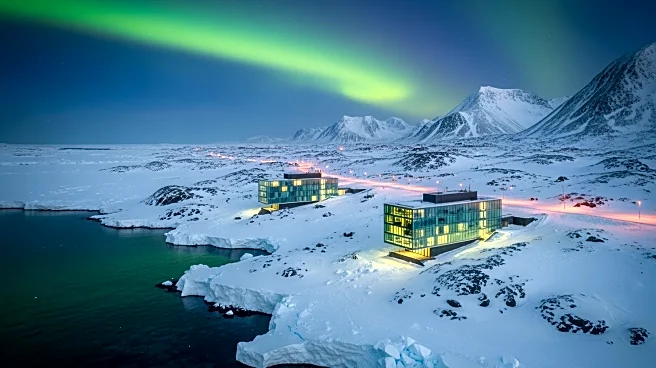
NATO is contemplating enhancing its security measures in the Arctic region as President Trump intensifies claims over Greenland. During a closed-door meeting in Brussels, NATO ambassadors discussed the potential
for increased defense spending and military exercises in the Arctic. The U.S. has expressed concerns over Russian and Chinese influence in Greenland, prompting discussions on leveraging intelligence capabilities to monitor the area. Denmark, which governs Greenland, has emphasized the issue as a bilateral matter, while NATO members have shown support for Denmark's stance. The meeting reflects growing European unease over U.S. intentions and the potential impact on transatlantic relations.
Why It's Important?
The discussions within NATO highlight the strategic importance of the Arctic region, particularly in light of President Trump's assertions regarding Greenland. The Arctic is rich in natural resources and holds significant geopolitical value, making it a focal point for international interest. The U.S.'s stance could strain relations within NATO, as European allies seek to balance cooperation with the U.S. against their own security interests. The situation underscores the complexities of Arctic geopolitics, where environmental, economic, and military considerations intersect.
What's Next?
NATO is expected to develop proposals for enhancing Arctic security, which may include increased military presence and joint exercises. The alliance will need to navigate the delicate balance of addressing U.S. concerns while maintaining unity among member states. Denmark and other European countries will likely continue diplomatic efforts to manage the situation and prevent escalation. The outcome of these discussions could influence future NATO strategies and the broader geopolitical landscape in the Arctic.