







What's Happening?
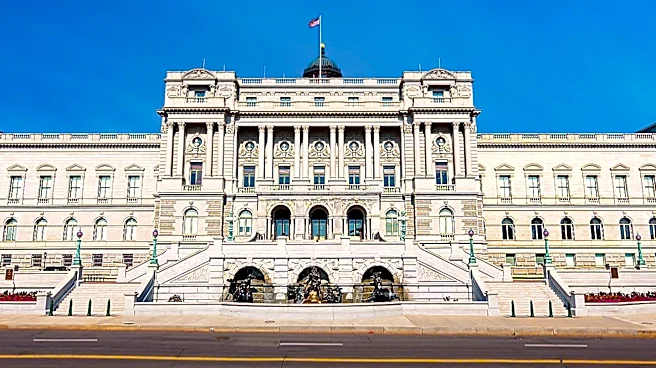
The Library of Congress, recognized as the world's largest library, was undergoing construction in June 1974. This initiative was undertaken to alleviate significant overcrowding within its facilities. The library houses an extensive collection of over 170
million objects, which includes rare books, historical diaries, personal letters, and various other artifacts of historical significance. Its primary location is the Thomas Jefferson Building in Washington, D.C. Beyond its vast collection, the Library of Congress is also involved in several key services and divisions, such as the Congressional Research Service, the General Reference and Bibliography Division, and the Broadcasting and Recorded Sound Division. These divisions contribute to its role as a comprehensive national resource.
Why It's Important?
The construction efforts at the Library of Congress in 1974 highlight the ongoing challenges faced by major cultural and historical institutions in managing and preserving vast collections. Overcrowding can impede access to critical resources for researchers, historians, and the general public, potentially affecting scholarly work and public education. The library's role extends beyond mere storage; it serves as a vital repository of American history and global knowledge, making its operational efficiency and accessibility paramount. Ensuring adequate space and infrastructure is crucial for the long-term preservation of its unique holdings and for supporting its various research and public service functions, which are essential for informed public discourse and legislative processes.
What's Next?
While the specific construction project from 1974 is historical, the need for ongoing infrastructure maintenance and expansion remains a constant for institutions like the Library of Congress. Future considerations for such large-scale libraries often involve continuous efforts to modernize facilities, implement advanced preservation techniques, and adapt to digital archiving needs. Stakeholders, including government funding bodies, preservationists, and the academic community, will likely continue to advocate for resources to ensure the library can meet its mission. The evolution of information storage and access technologies also suggests a future where physical space management is complemented by robust digital infrastructure development.
Beyond the Headlines
The continuous need for expansion and modernization at institutions like the Library of Congress reflects broader societal trends in information growth and preservation. Beyond simply housing books, these libraries are custodians of cultural memory and intellectual heritage. The challenges of physical space management intersect with ethical considerations regarding access, digitization, and the long-term viability of historical records in an increasingly digital world. The 1974 construction project underscores a recurring theme: the physical infrastructure of knowledge institutions must evolve to meet the demands of growing collections and changing user needs, ensuring that future generations have access to the foundational documents and narratives of human experience.