






What's Happening?
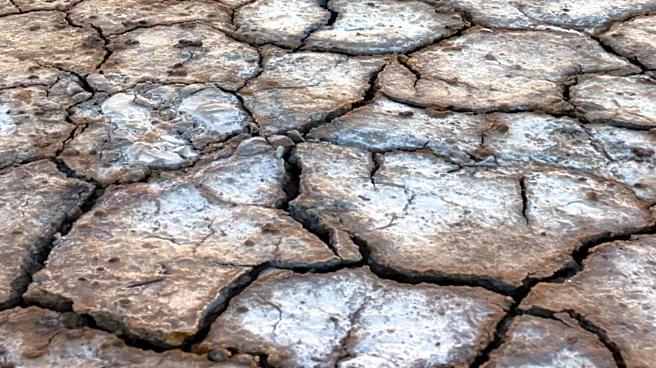
The irrigation season for farmers in Eastern Wyoming has been cut short due to historically low water supplies. The Pathfinder Irrigation District announced that its main Interstate Canal will shut down on August 7, earlier than expected, due to the severe
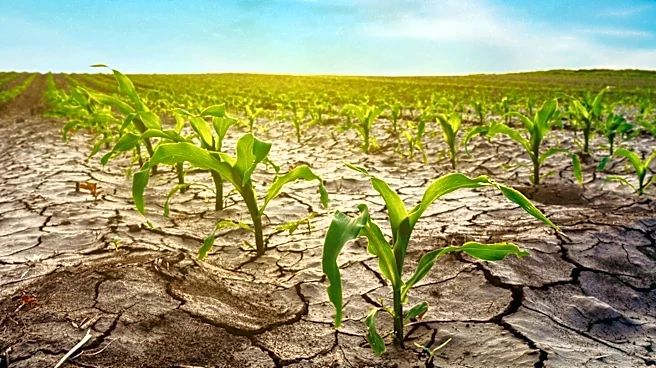
drought conditions. This decision affects over 100,000 acres of farmland that rely on water diverted from the North Platte River. The district had already faced challenges this year, including a dry winter that resulted in the worst recorded peak snowpack in the upper North Platte Basin and storm damage to canal sections in June. These factors delayed the start of the irrigation season, which typically begins in April, until June. The drought has also led to increased vegetation growth in canals, further complicating water delivery.
Why It's Important?
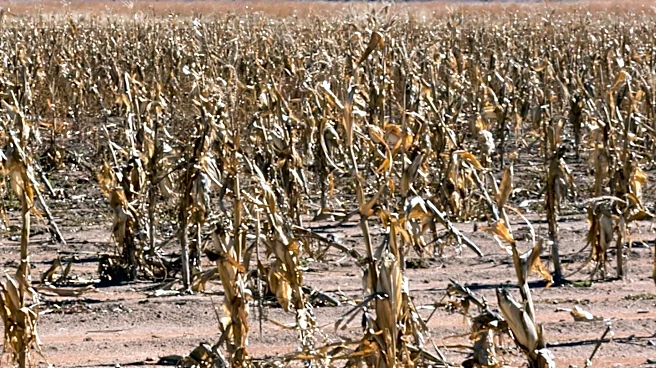
The early end to the irrigation season is a significant blow to the agricultural sector in Eastern Wyoming, impacting both crop yields and livestock management. Farmers are expected to see reduced yields, with some resorting to using drought-stressed corn for cattle feed instead of harvesting it for grain. The situation underscores the vulnerability of agricultural communities to climate variability and the critical importance of water management. The drought has also led to a decrease in herd numbers as ranchers move livestock to areas with available water. This development highlights the broader challenges faced by the agricultural industry in adapting to changing environmental conditions and the potential economic impact on local communities reliant on farming and ranching.
What's Next?
Farmers and ranchers are exploring options to mitigate the impact of the water shortage. Some are leasing water from other users who are not planting this year, while others rely on supplemental wells. The Pathfinder Irrigation District has considered leasing additional water but found it economically unfeasible. As the drought persists, stakeholders are hoping for more favorable water conditions in the future. The situation calls for increased cooperation and innovative water management strategies to ensure the sustainability of agricultural practices in the region.