


What's Happening?
Taiwan recently concluded its annual Han Kuang military exercise, which showcased a significant shift towards asymmetric warfare tactics in preparation for a potential invasion from mainland China. The drills, which spanned 10 days, moved from coastal
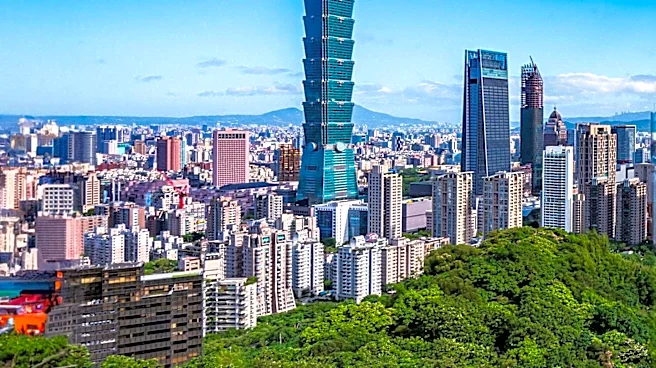
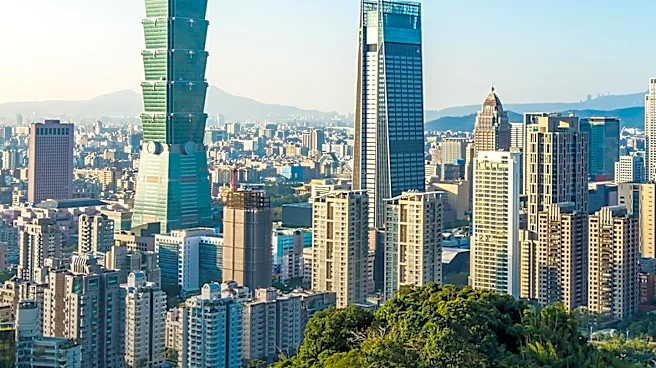
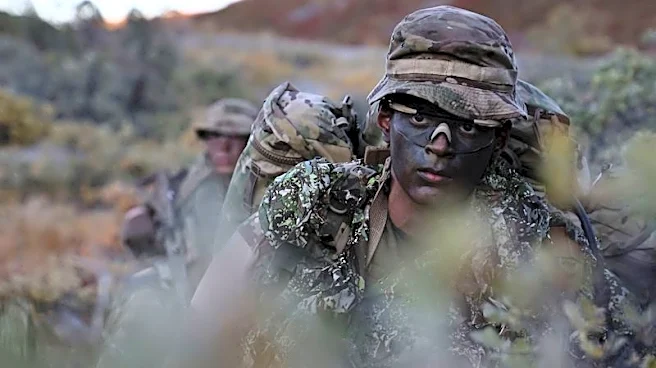
defenses to urban combat scenarios within Taipei, including simulated skirmishes in city streets and counter-sabotage operations at critical infrastructure like oil refineries. Taiwanese forces practiced ambush tactics, dispersed operations, and the use of barricades to create 'kill boxes' in urban intersections. The exercises also focused on maintaining operational capabilities under disrupted communications, with junior commanders practicing 'back briefs' to ensure mission understanding. Notably, the drills included the deployment of M1A2T Abrams tanks for ambushes on highways and the use of military police taking the subway to regroup and establish temporary headquarters. The Taiwanese defense ministry remained largely quiet on specific operational details, but the nature and locations of the drills provided insights into their defensive strategy.
Why It's Important?
Taiwan's pivot to asymmetric warfare, often referred to as the 'porcupine strategy,' is crucial given its significant disadvantage in military size and resources compared to China. By focusing on making an invasion prohibitively costly for Beijing, Taiwan aims to deter aggression and enhance its defensive capabilities. The emphasis on decentralized operations and small-unit tactics is vital for maintaining resistance if command-and-control structures are disrupted by initial missile attacks. The drills also highlight Taiwan's commitment to creating a 'drone hellscape' in the strait, utilizing uncrewed aerial and seaborne systems to inflict heavy losses on invading forces. This strategic shift has implications for regional stability, as it signals Taiwan's determination to defend itself and could influence the calculus of potential aggressors. The integration of civilian resources and infrastructure into defense planning also underscores a comprehensive approach to national security.
What's Next?
Taiwan is expected to continue refining its asymmetric warfare capabilities and integrating lessons learned from the Han Kuang exercises into its military doctrine and training. Future drills will likely further emphasize unscripted scenarios and decentralized command to enhance realism and adaptability. The ongoing development of indigenous defense capabilities, particularly in drone technology and anti-ship missiles, will remain a priority. Internationally, Taiwan will likely seek continued support and arms sales from allies, particularly the United States, to bolster its defensive posture. The observed shift in military culture, as noted by former Taiwanese special forces paratrooper Lin Ping-yu, suggests a sustained effort to rebuild operational edge and readiness. These developments will be closely watched by China, which views Taiwan as a renegade province, and by international observers concerned about potential conflict in the Indo-Pacific.
Beyond the Headlines
The Han Kuang exercises reveal a deeper strategic evolution within Taiwan's military, moving beyond traditional, large-scale conventional defense to a more agile and resilient approach. This shift reflects a recognition that direct military parity with China is unattainable and that innovative, cost-effective methods are necessary for survival. The integration of urban combat scenarios and civilian infrastructure into military planning also highlights the potential for a protracted and complex conflict that would deeply involve the civilian population. Ethically, this raises questions about the nature of modern warfare in densely populated areas and the protection of non-combatants. Legally, the emphasis on decentralized operations could complicate adherence to international laws of armed conflict if units are operating independently without clear central command. Culturally, the exercises aim to instill a greater sense of preparedness and resilience within Taiwanese society, fostering a 'whole-of-society' defense concept against external threats.