


What's Happening?
Nobukatsu Kanehara, a former senior national security official under the Shinzo Abe administration, has stated that Japan could invoke its right to self-defense if a blockade in the Strait of Hormuz severely impacts its economy. The Strait of Hormuz is a critical
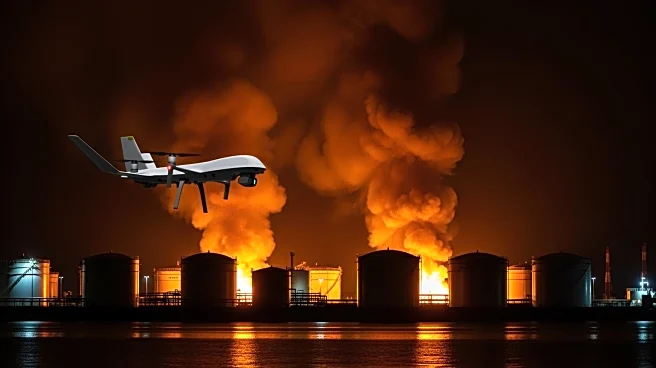
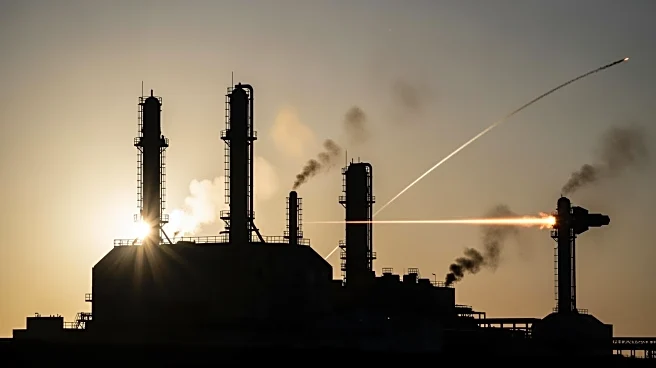
chokepoint for global oil transit, with significant implications for Japan, which relies on it for over 90% of its crude oil imports. Kanehara, who played a key role in Japan's security legislation under Abe, suggests that a prolonged disruption could justify Japan's use of limited force to protect its economic interests. This could include escorting tankers and conducting mine-clearing operations. The situation arises amid tensions following US-Israel strikes on Iran, which have led to threats and constraints on traffic through the strait by Tehran.
Why It's Important?
The potential invocation of self-defense rights by Japan in response to a Hormuz blockade highlights the strategic importance of the strait for global energy security and economic stability. For Japan, a nation heavily reliant on oil imports, any disruption could have severe economic consequences. This situation underscores the broader geopolitical tensions in the Middle East and their ripple effects on international trade and security. The possibility of Japan engaging in military actions also reflects the ongoing debate about its postwar constitutional constraints and the reinterpretation of its self-defense capabilities. Such developments could influence Japan's defense policies and its role in international security alliances, particularly with the United States.
What's Next?
While the situation remains fluid, with Japan holding significant oil reserves to buffer short-term impacts, the potential for a prolonged conflict could necessitate further actions. Kanehara suggests that Japan should prepare for mine-clearing operations and tanker protection if a ceasefire is reached. The broader implications for US military resources, already stretched by commitments in the Middle East, could affect its strategic posture in other regions, including Northeast Asia. This could impact the US's ability to contain other geopolitical threats, such as those posed by China. Japan's response to these developments will likely be closely watched by international stakeholders.
Beyond the Headlines
The current tensions in the Strait of Hormuz also bring to light the structural constraints imposed on Japan's defense posture by its postwar constitutional framework. Kanehara points out that the limitations of Article 9, which renounces war, continue to create legal ambiguities regarding Japan's military capabilities. The ongoing situation may reignite discussions about constitutional reforms and Japan's future defense strategies. Additionally, the strain on US military resources due to Middle East engagements could have long-term implications for global security dynamics, particularly in the Asia-Pacific region.