



What's Happening?
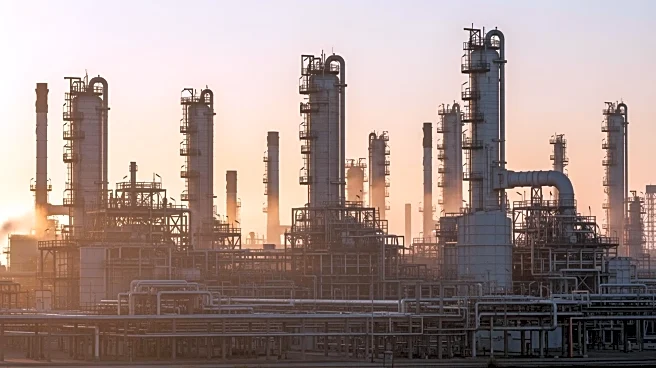
Saudi Aramco has resumed operations at its Ras Tanura refinery, the largest in Saudi Arabia, following a temporary shutdown due to a drone attack. The facility, which processes 550,000 barrels per day, was closed on March 2 as a precautionary measure
after debris from intercepted drones caused a limited fire. The refinery is a critical component of Saudi Arabia's oil export infrastructure, located on the Persian Gulf coast near the main export terminal. The attack is part of a series of Iranian assaults that have affected several Middle Eastern energy facilities, including those in the United Arab Emirates and Qatar. The closure of the Strait of Hormuz, a vital oil transit route, has further complicated the situation, leading to storage capacity issues and production curtailments.
Why It's Important?
The reopening of the Ras Tanura refinery is significant for global oil markets, as it alleviates some of the supply disruptions caused by the recent geopolitical tensions in the Gulf region. The Strait of Hormuz is a critical chokepoint for global oil supply, and its effective closure has heightened concerns about energy security and market stability. The incident underscores the vulnerability of key energy infrastructure to geopolitical conflicts and the potential for such events to impact global oil prices and supply chains. The ability of Saudi Aramco to quickly resume operations highlights the resilience of its infrastructure, but also points to the ongoing risks associated with regional tensions.
What's Next?
The situation remains tense, with Gulf nations preparing for potential further attacks. Saudi Arabia and its allies have indicated they possess significant capabilities to respond if necessary, though the timing and nature of any response remain uncertain. The ongoing geopolitical instability in the region could lead to further disruptions in oil supply, affecting global markets. Stakeholders, including governments and energy companies, will likely continue to monitor the situation closely and may need to adjust their strategies to mitigate risks associated with such geopolitical threats.