




What's Happening?
A French soldier was killed and three others were injured in an attack on a United Nations peacekeeping force in southern Lebanon. The incident occurred near the village of Ghandouriyeh, following a ceasefire between Israel and Hezbollah. French President
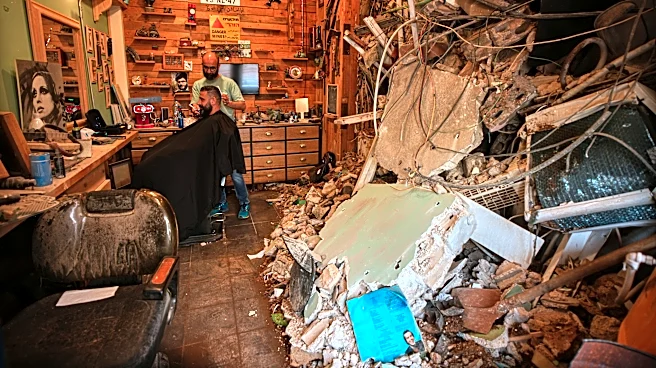
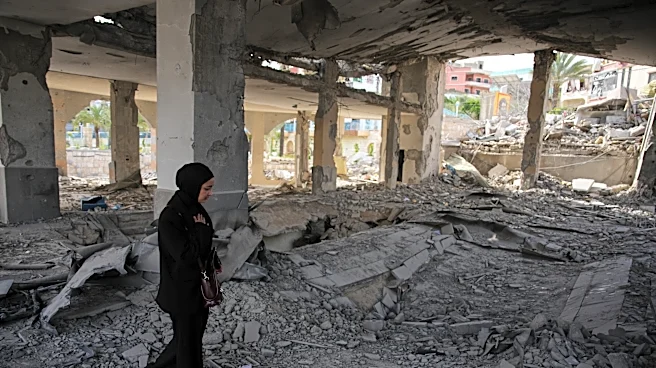
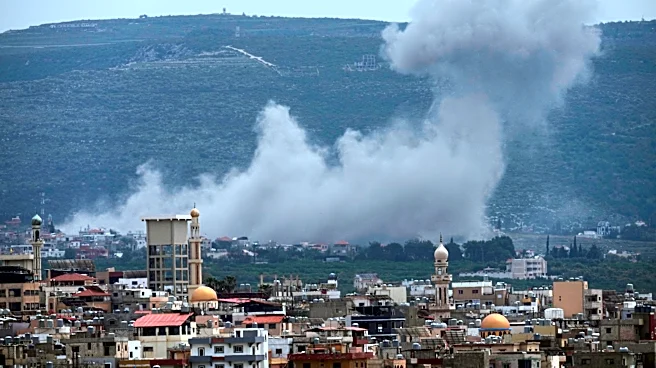
Emmanuel Macron and the UNIFIL force have attributed the attack to Hezbollah, although the group has denied involvement. The attack comes in the wake of a recent conflict that began when Hezbollah launched rockets into Israel, prompting a military response. The conflict has resulted in significant casualties and displacement in Lebanon. An investigation has been launched by Lebanon's Military Tribunal to identify those responsible for the attack.
Why It's Important?
The attack on UN peacekeepers highlights the fragile security situation in southern Lebanon and the ongoing tensions between Israel and Hezbollah. The incident underscores the challenges faced by international peacekeeping forces operating in volatile regions. The death of the French soldier also raises questions about the safety and effectiveness of UN missions in conflict zones. The situation could impact diplomatic relations and international efforts to stabilize the region. The involvement of major powers like France and the U.S. in the ceasefire agreement further complicates the geopolitical landscape, with potential implications for regional stability and international peacekeeping strategies.
What's Next?
The Lebanese authorities are under pressure to conduct a thorough investigation and bring those responsible for the attack to justice. The outcome of this investigation could influence future peacekeeping operations and the role of international forces in Lebanon. Additionally, the ceasefire's durability remains uncertain, as Hezbollah has expressed dissatisfaction with the terms and has warned against further Israeli strikes. The international community, including France and the U.S., will likely continue to monitor the situation closely, with potential diplomatic interventions to prevent further escalation.