





What's Happening?
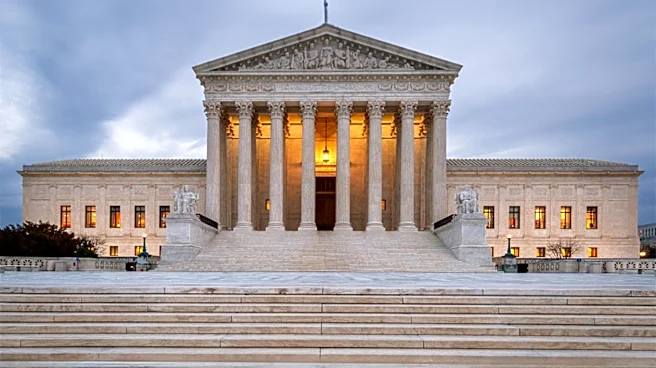
Congresswoman Lizzie Fletcher, representing Texas's 7th congressional district, has publicly stated that a recent Supreme Court ruling is a victory for voters and for America. Her comments emphasize the importance of ensuring that neither the President
nor the postal service has the authority to determine which votes count or which ballots can be delivered. This statement underscores a commitment to the integrity of the electoral process and the fundamental right to vote. The specific details of the Supreme Court ruling are not provided in the source, but Fletcher's reaction highlights its perceived positive impact on democratic principles and voter access. Her remarks suggest that the ruling reinforces the idea that all eligible ballots should be processed without undue interference from executive or administrative bodies.
Why It's Important?
This development is important because it reinforces the foundational principles of democratic elections in the U.S. Congresswoman Fletcher's endorsement of the Supreme Court ruling signals a bipartisan consensus, or at least a significant political alignment, on the protection of voting rights. The assertion that neither the President nor the postal service should control ballot validity directly addresses concerns about potential political interference in elections, a topic that has been a point of contention in recent years. For U.S. society, this ruling and its positive reception by lawmakers like Fletcher can help bolster public confidence in the electoral system. It underscores the judiciary's role in safeguarding democratic processes and ensuring that the mechanisms of voting remain fair and accessible to all eligible citizens, thereby strengthening the legitimacy of election outcomes.
What's Next?
Following Congresswoman Fletcher's statement, it is likely that discussions around voter access and election integrity will continue to be prominent in political discourse. The Supreme Court ruling, as interpreted by Fletcher, could set a precedent for future electoral challenges and policy debates regarding the administration of elections. Lawmakers may use this ruling as a basis for advocating for or against specific legislative measures related to voting procedures, mail-in ballots, and the role of federal agencies in election oversight. Advocacy groups focused on voting rights will likely leverage this decision to push for reforms that further protect and expand voter access. Conversely, those who have expressed concerns about election security may scrutinize the ruling's implications for preventing fraud, potentially leading to ongoing legal and political debates about the balance between access and security in U.S. elections.
Beyond the Headlines
Beyond the immediate political implications, this Supreme Court ruling, as championed by Congresswoman Fletcher, touches upon deeper ethical and cultural dimensions of American democracy. It speaks to the ongoing struggle to balance governmental authority with individual rights, particularly the right to participate in the democratic process. The emphasis on preventing executive or administrative bodies from dictating whose votes count reflects a broader societal value placed on fairness and equal representation. This ruling could contribute to a long-term shift in how election administration is perceived and regulated, potentially leading to greater scrutiny of any attempts to centralize control over voting processes. It also highlights the judiciary's critical role as a check on executive power, reinforcing the separation of powers doctrine that is fundamental to the U.S. constitutional framework. The cultural impact could be a renewed focus on civic engagement and the importance of every citizen's vote.