






What's Happening?
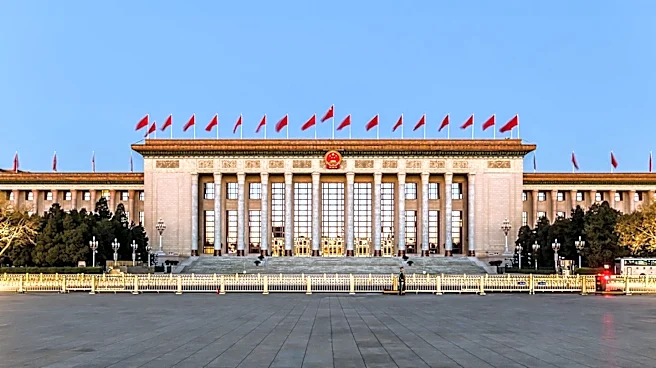
China has issued a comprehensive policy statement titled 'China’s Position on Strengthening Outer Space Governance,' which addresses the current legal frameworks' inability to keep pace with rapid technological advancements and commercial expansion in space.
The document emphasizes openness, shared benefits, and sovereign equality, asserting that the advantages of space exploration should be accessible to all nations. It also calls for practical cooperation, transparency, and regulation in emerging areas such as on-orbit servicing, deep-space exploration, and commercial spaceflight. The policy outlines four foundational principles for outer space governance: upholding rules and order, adopting a comprehensive approach, maintaining an equilibrium of interests, and exercising self-restraint. Additionally, it presents 10 proposals aimed at addressing security and development concerns, including preventing armed conflicts and ensuring equitable access for developing countries. This move positions China as a key player in shaping future global space governance, advocating for international law and multilateralism over unilateral actions.
Why It's Important?
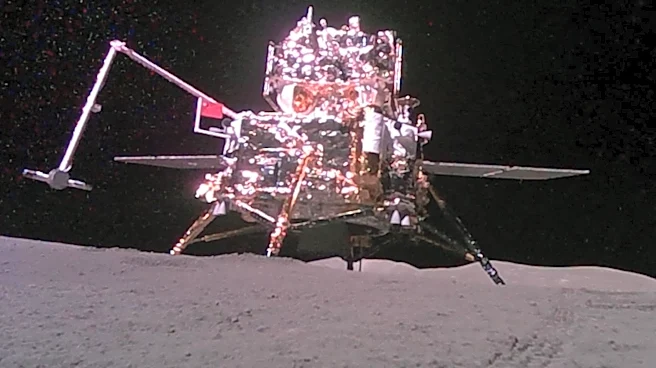
This policy statement is significant because it challenges the existing Western-led frameworks for space governance and proposes an alternative centered on inclusivity and multilateralism. For the U.S., this could mean a shift in global influence regarding space policy, especially as the International Space Station (ISS) approaches its decommissioning around 2030. China's rapid development of its Tiangong space station, following its exclusion from the ISS, demonstrates its technological self-reliance and growing leadership in space. The U.S. scientific community risks being isolated from groundbreaking research conducted on platforms like Tiangong if current exclusionary policies persist. The document's emphasis on preventing an arms race and ensuring equal access for developing countries also highlights a potential divergence in strategic priorities, with China advocating for a more collaborative and less confrontational approach to space, which could impact future international partnerships and resource allocation in space.
What's Next?
The release of China's policy statement is likely to intensify discussions and negotiations around future international space governance. As the ISS nears its operational end, the international community will need to address the void in low-Earth orbit leadership. China's framework, which prioritizes joint contribution and shared technological development, may attract international space agencies, private enterprises, and developing nations seeking operational stability and open access. The U.S. will face increasing pressure to re-evaluate its current space policies, particularly those that have historically excluded China, to avoid further isolation of its scientific community and to maintain its influence in global space affairs. Future collaborations and regulatory standards in space will likely be shaped by the ongoing dialogue between these differing approaches to governance, with potential implications for space debris mitigation, collision alerts, and the regulation of commercial space activities.
Beyond the Headlines
The deeper implications of China's policy extend beyond technical cooperation to fundamental questions of global power dynamics and ethical governance in a new frontier. By advocating for non-discriminatory access and capacity building for developing countries, China is not only challenging the U.S.'s historical dominance but also attempting to redefine the moral and ethical principles of space exploration. The policy's explicit opposition to states using domestic laws to impose unilateral sanctions on other nations' space activities directly critiques past U.S. actions, such as the Wolf Amendment. This shift could lead to a more fragmented or a more inclusive international space regime, depending on how major spacefaring nations respond. The debate over who sets the rules for space—and who benefits from its resources—will have long-term consequences for international relations, technological development, and the equitable distribution of scientific and economic opportunities in the cosmos.