







What's Happening?
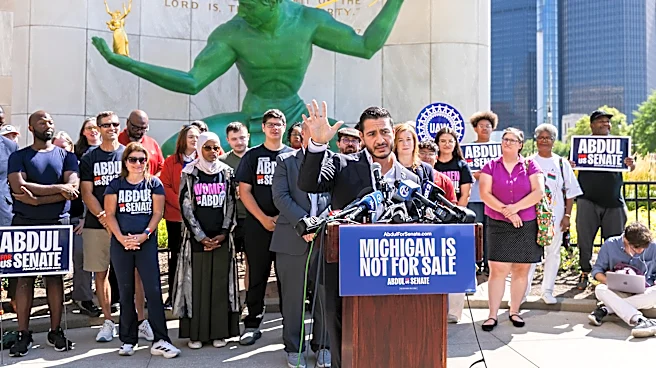
The Democratic Senate primary in Michigan is drawing attention as progressive candidate Abdul El-Sayed is favored to defeat Rep. Haley Stevens, despite significant financial backing for Stevens from super PACs. The United Democracy Project, backed by
AIPAC, has spent $30 million supporting Stevens, while El-Sayed has received only $3.5 million from super PACs. This primary is seen as a test of the influence of well-funded interest groups in Democratic politics. The outcome could signal a shift in perception, suggesting that Democrats may have less to fear from these groups than previously thought. The primary reflects broader trends in Democratic politics, where there is increasing resistance to industry-backed super PACs and a push for more progressive policies.
Why It's Important?
The Michigan primary could have significant implications for Democratic politics, particularly in how candidates perceive the influence of super PACs. A victory for El-Sayed, despite the financial disadvantage, could encourage other Democratic politicians to stand up to well-funded interest groups. This shift could lead to more progressive policies and a reevaluation of the role of money in politics. It also highlights a growing trend among Democrats to challenge the influence of industries such as AI and cryptocurrency, which have been significant players in recent elections. The outcome of this primary could reshape campaign strategies and policy priorities within the Democratic Party.
What's Next?
If El-Sayed wins, it could embolden other progressive candidates to challenge industry-backed opponents in future elections. This could lead to a reevaluation of campaign strategies and a shift towards more grassroots-focused approaches. The influence of super PACs may be scrutinized more closely, potentially leading to calls for campaign finance reform. Additionally, the outcome could impact upcoming elections, as other candidates may adopt similar strategies to El-Sayed's, focusing on grassroots support rather than relying on large financial contributions from interest groups.