





What's Happening?
A study conducted by researchers at the School of Life Sciences, Ecole Polytechnique Fédérale de Lausanne (EPFL), has uncovered a mechanism by which the bacterium Vibrio cholerae, responsible for cholera, enhances its defense systems. The bacterium can
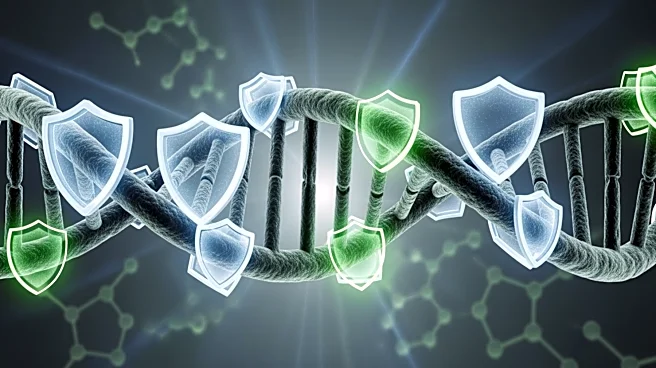
acquire new gene cassettes from extracellular DNA released by other strains and species, integrating them into its sedentary chromosomal integron (SCI). This process, known as natural competence, allows V. cholerae to incorporate protective genes that enhance its antiviral defenses. The study highlights the role of SCIs as reservoirs of exchangeable genes, which can be activated under specific environmental conditions, such as growth on chitinous surfaces found in aquatic environments.
Why It's Important?
The findings have significant implications for understanding bacterial adaptation and survival strategies. By acquiring new gene cassettes, V. cholerae can potentially expand its defense arsenal against viral attacks, which is crucial for its survival in diverse environments. This mechanism may influence the effectiveness of phage-based strategies currently being explored to prevent cholera outbreaks. The study suggests that the static nature of the SCI in pandemic strains reflects adaptation to human-associated environments, where conditions for gene acquisition are less favorable. Understanding these dynamics is vital for developing effective interventions against cholera, particularly in endemic regions.
What's Next?
Future research may focus on exploring the conditions that enable SCI cassette acquisition in pandemic strains, potentially expanding their antiviral defenses. This could impact the development of phage-based prophylaxis strategies against cholera. Researchers may also investigate the broader implications of SCI-mediated gene exchange across different bacterial species, which could inform strategies for managing bacterial infections and enhancing public health responses.
Beyond the Headlines
The study raises questions about the evolutionary flexibility of V. cholerae and its ability to adapt to changing environments. The potential for SCI-mediated diversification to cross species boundaries suggests a complex interplay between bacterial genetics and environmental factors. This could lead to new insights into bacterial evolution and the development of novel therapeutic approaches.