





What's Happening?
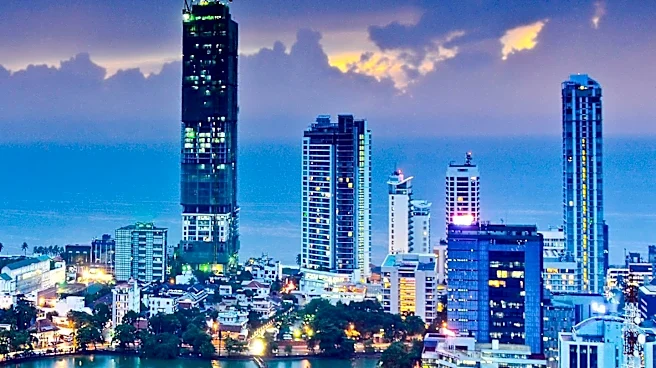
Sri Lanka has launched two World Bank-backed advisory projects to redefine its tourism strategy and international promotional roadmap. These initiatives, supported by a total grant allocation of $1 million from the World Bank's Grant Facility for Project
Preparation, aim to shift the focus from merely increasing visitor numbers to enhancing the value generated by tourism. The National Tourism Strategic Planning Consultancy (2026–2031), awarded to a joint venture between Spain's Aninver Development Partners and Sri Lanka's EML Consultants PLC, will develop a five-year framework covering demand and supply analysis, investment needs, regulatory updates, workforce training, and execution. Concurrently, the Global Destination Communication Campaign Road Map Consultancy, led by US-based Skift Inc. and Sri Lankan MTI Consulting, will craft a five-year international marketing plan. Deputy Minister of Foreign Affairs, Foreign Employment and Tourism Professor Ruwan Ranasinghe emphasized that Sri Lanka, as a compact island nation with delicate ecosystems and cultural heritage, needs to prioritize value over sheer volume, estimating a maximum threshold of approximately five million tourists.
Why It's Important?
This strategic shift is crucial for Sri Lanka's economic development, aiming to maximize revenue from tourism rather than just visitor counts. By focusing on high-spending travelers and longer stays, the country seeks to increase the average spend per tourist, which is currently below 2018 levels despite surpassing pre-pandemic visitor numbers. The initiatives will also work to distribute the economic benefits of tourism across all nine provinces, fostering more inclusive growth. For U.S. businesses, particularly those in the travel and hospitality sectors, this presents opportunities for collaboration and investment in a market that is actively seeking to enhance its offerings and attract affluent visitors. The involvement of a U.S. company, Skift Inc., in the global promotional campaign underscores the potential for American expertise to shape Sri Lanka's international tourism narrative and attract a more lucrative demographic.
What's Next?
The two consultancy projects will proceed with stakeholder co-creation workshops in October and validation sessions in January. The National Tourism Strategic Planning Consultancy will deliver a comprehensive strategic framework, while the Global Destination Communication Campaign Road Map Consultancy will produce a five-year global promotional campaign strategy. These roadmaps are expected to guide the industry's future development and international positioning through 2031. The Deputy Minister has stressed the importance of practical implementation, urging advisors and officials to ensure the execution of all proposed measures to avoid creating another 'stagnant document.' The industry will be closely watching the outcomes of these workshops and validation sessions to understand the specific direction and opportunities that will emerge from Sri Lanka's new tourism strategy.
Beyond the Headlines
The pivot from volume to value in Sri Lanka's tourism strategy reflects a broader global trend towards sustainable and high-yield tourism, moving away from the potential negative impacts of overtourism seen in other destinations. This approach acknowledges the delicate balance between economic gain and environmental/cultural preservation, particularly for a small island nation. The emphasis on data analytics, as highlighted by World Bank Lead Private Sector Specialist Natasha Kapil, signifies a move towards more sophisticated and targeted marketing, which could set a precedent for other developing nations. Furthermore, the focus on distributing economic benefits more widely across provinces and supporting local small businesses aims to address socio-economic disparities and ensure that tourism contributes to the well-being of a broader segment of the population, rather than concentrating wealth in a few hands.