
What's Happening?
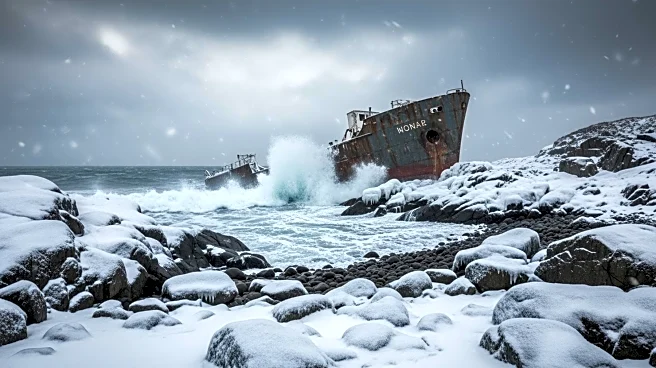
The MSC Baltic III, a vessel grounded in Newfoundland since February 2025, has sustained additional damage due to severe winter storms in November and December. The Canadian Coast Guard has reported significant
damage to the hull, including buckling of steel plates and a lower stern portion. Salvage efforts, led by T&T Salvage and overseen by the Coast Guard, have been hampered by harsh weather conditions. The vessel, which lost power and was driven ashore by high surf, has been difficult to remove due to its location on a rocky coast. Efforts to clean up residual oil and pollutants have been ongoing, with 1665.7 cubic meters of heavy oil removed by September. However, recent storms have revealed more oily debris and a tar ball, complicating the salvage operations.
Why It's Important?
The situation with the MSC Baltic III highlights the challenges of maritime salvage operations in harsh weather conditions. The additional damage to the vessel increases the likelihood that it may need to be scrapped in place, raising environmental concerns about potential pollution. The ongoing presence of pollutants and the difficulty in removing the vessel underscore the environmental risks associated with maritime accidents. The incident also emphasizes the importance of robust emergency response and salvage capabilities to mitigate environmental impacts and ensure maritime safety.
What's Next?
As weather conditions improve, salvage crews are expected to continue damage assessments and clean-up operations. The Canadian Coast Guard will likely provide further updates on the vessel's condition and any additional damage. The decision on whether to scrap the vessel in place will depend on the extent of the damage and the feasibility of removal. Continued monitoring and clean-up efforts will be crucial to minimizing environmental impacts and ensuring the safety of the surrounding area.