







What's Happening?
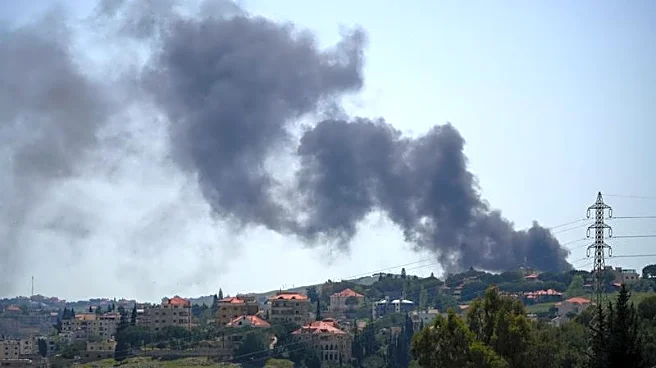
The Israeli Defense Forces (IDF) recently conducted a covert operation in southern Lebanon, crossing the Litani River to engage Hezbollah fighters. The operation, led by the Golani Reconnaissance Unit, aimed to disrupt Hezbollah's operational capabilities
by targeting their positions, tunnels, and weapon storage sites. Over three days, IDF troops faced intense combat, utilizing advanced robots and airstrikes to neutralize threats. The operation resulted in the deaths of dozens of Hezbollah fighters and the injury of several IDF soldiers. The IDF also uncovered and destroyed significant underground infrastructure used by Hezbollah for potential raids into Israeli territory.
Why It's Important?
This operation is significant as it highlights the ongoing tensions and military engagements between Israel and Hezbollah. By targeting Hezbollah's infrastructure, the IDF aims to prevent future attacks on Israeli soil, thereby enhancing national security. The use of advanced technology, such as robots and airstrikes, underscores the evolving nature of modern warfare and the IDF's commitment to maintaining a strategic advantage. The operation also reflects the broader geopolitical dynamics in the region, where Israel seeks to counteract the influence and capabilities of Hezbollah, a group backed by Iran.
What's Next?
Following the operation, the IDF is likely to continue monitoring and securing the area to prevent Hezbollah from re-establishing their positions. The use of explosive drones by Hezbollah poses an ongoing challenge, prompting the IDF to adapt its defensive strategies. The international community, particularly countries involved in Middle Eastern diplomacy, may respond to this development by reassessing their positions and strategies regarding the Israel-Hezbollah conflict. Further military engagements in the region could escalate tensions, impacting regional stability.