





What's Happening?
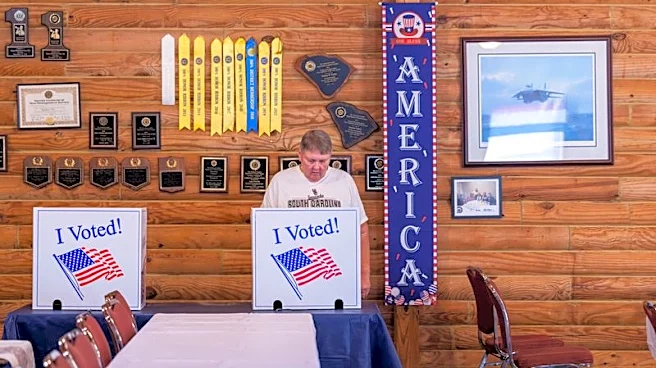
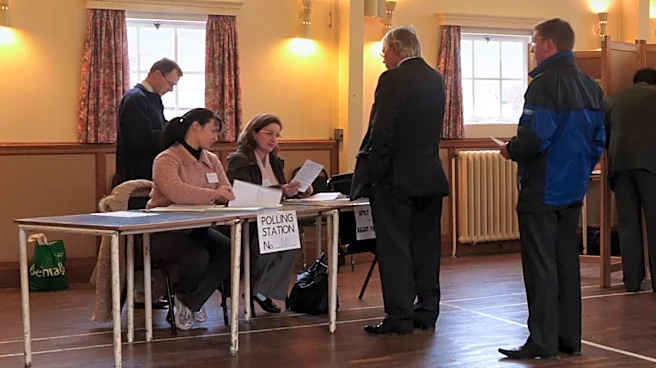
Former American Bar Association (ABA) President Deborah Enix-Ross has shared her personal experience serving as a poll worker in her hometown. According to Enix-Ross, this direct involvement helped her neighbors develop greater trust in the election system.
Her account emphasizes the tangible impact that individual participation in the electoral process can have on community confidence. The ABA has also encouraged others to get involved in upcoming elections, suggesting that such engagement is crucial for fostering belief in the integrity of democratic procedures. This initiative aligns with broader efforts to strengthen public faith in election outcomes by promoting transparency and direct community involvement.
Why It's Important?
The importance of Deborah Enix-Ross's statement lies in its direct address to the issue of election trust, a critical component of a functioning democracy in the U.S. In recent years, public confidence in election systems has faced scrutiny, making efforts to rebuild and maintain that trust paramount. When a figure like a former ABA President, who represents legal and ethical standards, shares a positive experience as a poll worker, it lends significant credibility to the process. This personal testimony can encourage civic engagement and volunteerism, which are vital for the smooth operation of elections. By highlighting the role of poll workers, the initiative underscores that elections are managed by community members, not just abstract governmental bodies, thereby humanizing the process and potentially mitigating skepticism.
What's Next?
Following Deborah Enix-Ross's sharing of her experience, the American Bar Association is actively encouraging more individuals to get involved as poll workers in upcoming elections. This push aims to replicate the positive impact Enix-Ross observed in her community, fostering greater trust and transparency in the electoral system nationwide. The ABA's continued advocacy will likely involve outreach programs and informational campaigns to educate the public on the responsibilities and benefits of serving as a poll worker. The goal is to increase volunteer numbers, ensuring that polling places are adequately staffed by trusted community members, which could lead to a more robust and publicly accepted election process in the future.
Beyond the Headlines
Deborah Enix-Ross's narrative extends beyond a simple call for civic duty; it touches upon the foundational principles of democratic legitimacy. In an era marked by political polarization and misinformation, the act of a community member serving as a poll worker can be a powerful antidote to distrust. It transforms an abstract governmental function into a tangible, local effort, reinforcing the idea that elections are run by and for the people. This grassroots engagement can help bridge divides by fostering shared responsibility for democratic processes, potentially leading to a more cohesive and trusting society. The ethical dimension is also significant, as the legal community, represented by the ABA, champions the integrity of the electoral system through direct participation.