



What's Happening?
Shanghai, a municipality directly under China's central government, is a prominent global city situated in the Yangtze River Delta, where the Yangtze River meets the East China Sea. It is recognized for its port, which consistently ranks first worldwide
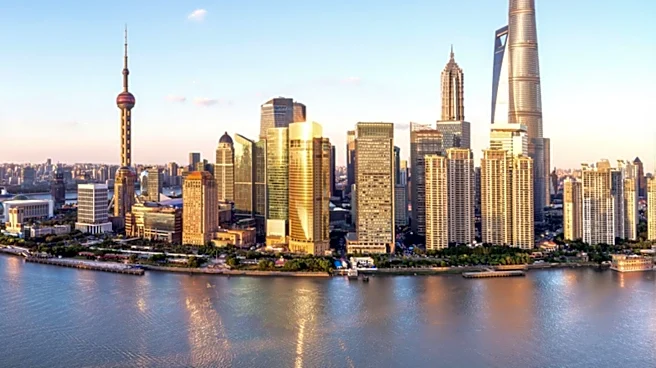
in container throughput, serving as a critical international gateway. The city's unique cultural identity is a result of a century of history as an open port, blending Chinese and Western influences. This is evident in its architecture, with over 50 classic Western-style buildings along the Bund in Puxi, featuring Gothic and Baroque designs, contrasting with modern skyscrapers like the Oriental Pearl Tower and Shanghai Tower in Lujiazui, Pudong. Shanghai also preserves ancient charm in areas like Yuyuan Garden and Zhujiajiao, alongside Old Shanghai's shikumen courtyard houses and garden villas in Wukang Road, Xintiandi, and Tianzifang. The city offers a vibrant metropolitan experience combined with everyday life charm, allowing visitors to enjoy riverfront views, local delicacies such as crab-meat xiaolongbao, and a rich array of museums and art galleries.
Why It's Important?
Shanghai's status as a leading global port and economic center has significant implications for international trade and supply chains, including those impacting the U.S. Its massive container throughput facilitates the movement of goods worldwide, making it a crucial node in global commerce. The city's blend of cultures and historical significance also makes it a key destination for tourism and cultural exchange, potentially influencing international relations and understanding. For U.S. businesses, Shanghai represents a major market and a critical logistical hub for operations in Asia. The city's continuous development and economic dynamism can affect global economic trends, investment flows, and technological advancements. Its unique urban landscape, combining historical preservation with modern innovation, offers insights into urban development strategies that could be relevant for city planners and policymakers globally.
What's Next?
Shanghai is expected to continue its role as a major economic and cultural powerhouse. Ongoing urban development projects and infrastructure enhancements will likely further solidify its position as a global city. The city's commitment to preserving its historical sites while embracing modernity suggests a continued focus on sustainable development and cultural tourism. Future initiatives may include further integration of technology into urban life, enhancing its smart city capabilities, and expanding its influence in global finance and innovation. As a key player in China's economic strategy, Shanghai will likely remain at the forefront of international trade policies and economic reforms, which could have ripple effects on global markets and U.S.-China economic relations. The city's cultural scene is also anticipated to evolve, attracting more international events and fostering greater cross-cultural dialogue.
Beyond the Headlines
Beyond its economic and cultural prominence, Shanghai embodies a fascinating interplay of tradition and progress. The city's ability to integrate diverse architectural styles and historical narratives into a cohesive urban fabric reflects a broader societal dynamic of adapting to global influences while retaining distinct local identity. This cultural synthesis presents a model for other rapidly developing urban centers grappling with globalization. Furthermore, Shanghai's massive port operations highlight the intricate dependencies of global supply chains and the environmental challenges associated with such large-scale industrial activity. The city's efforts in urban planning and environmental management, particularly in balancing economic growth with sustainability, offer valuable lessons. The continuous evolution of Shanghai's identity, from a historical treaty port to a modern global metropolis, underscores the complex forces shaping contemporary urbanism and international relations.