





What's Happening?
The SpaceX Dragon spacecraft successfully docked with the International Space Station (ISS) on May 17, 2026, at 6:37 a.m. EDT. This marks the 34th commercial resupply mission by SpaceX for NASA. The Dragon carried nearly 6,500 pounds of cargo, including
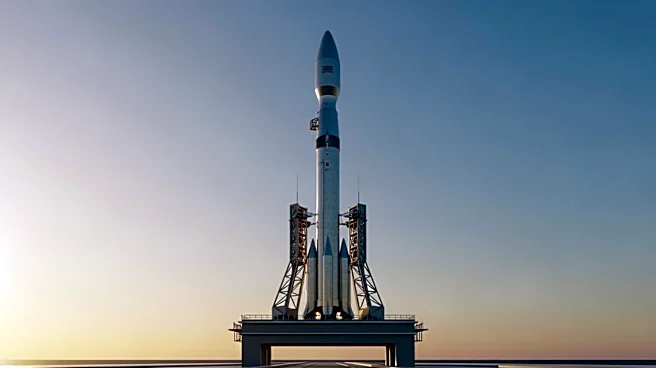
food, supplies, and scientific equipment for the Expedition 74 crew. Among the new experiments delivered are projects to assess the effectiveness of Earth-based simulators in replicating microgravity, a bone scaffold made from wood for potential osteoporosis treatments, and tools to study changes in red blood cells and the spleen in space. Additionally, the mission includes an instrument to study charged particles around Earth, which could impact power grids and satellites, and another to measure sunlight reflected by Earth and the Moon. The mission launched on May 15 from Cape Canaveral Space Force Station in Florida aboard a SpaceX Falcon 9 rocket.
Why It's Important?
This mission underscores the ongoing collaboration between NASA and SpaceX in advancing scientific research in space. The experiments aboard the Dragon spacecraft have the potential to significantly impact various fields, including medicine and environmental science. For instance, the bone scaffold experiment could lead to new treatments for osteoporosis, a condition affecting millions worldwide. The study of charged particles is crucial for understanding space weather, which can affect satellite operations and power grids on Earth. These advancements not only enhance our understanding of space but also have practical applications that can benefit society on Earth. The mission also highlights the importance of commercial partnerships in expanding the capabilities of space exploration.
What's Next?
Following the successful docking, the ISS crew will begin unloading the cargo and setting up the new experiments. The results from these studies could lead to breakthroughs in medical treatments and provide insights into the effects of space travel on the human body. The data collected will also contribute to the safety and efficiency of future space missions, particularly as NASA and its partners plan for longer-duration missions to the Moon and Mars. Continued collaboration with commercial partners like SpaceX is expected to play a vital role in these future endeavors.