







What's Happening?
The Phoenix area real estate market is experiencing a significant trend towards multigenerational living, as highlighted in a recent episode of “On Your Side: The Home Edition.” This trend involves families seeking homes large enough to accommodate aging
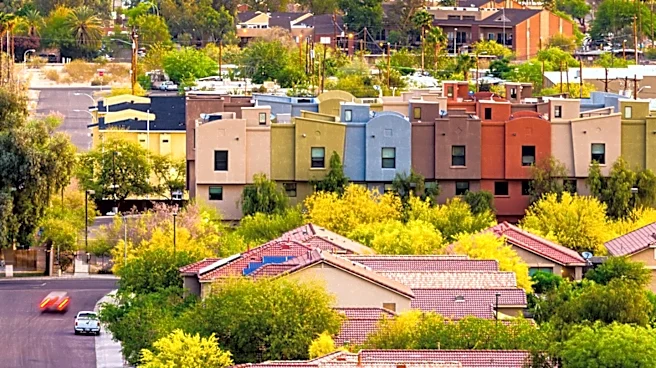
parents or adult children under the same roof. Real estate agents like Shannon Gillette and Jadé Soto are observing this shift, with buyers actively looking for properties that facilitate this living arrangement. The demand is not limited to specific price points, as the program showcased both luxury hillside estates in Mesa and more affordable $500,000 homes in established neighborhoods like Ahwatukee, all catering to the need for expanded family living spaces. This indicates a broad-based interest across different segments of the housing market in the Phoenix metropolitan area.
Why It's Important?
The rise of multigenerational living in the Phoenix area reflects broader societal and economic shifts impacting U.S. families. Economically, it can be a response to increasing housing costs, allowing families to pool resources and afford larger or more desirable homes. It also provides a practical solution for childcare or elder care, reducing financial burdens on individual family members. Socially, this trend can strengthen family bonds and provide a supportive environment for both younger and older generations. For the real estate industry, it signifies a growing niche market, prompting developers and agents to adapt their offerings to include features like multiple master suites, separate living areas, or accessory dwelling units. This trend could influence future urban planning and housing development, with a greater emphasis on flexible home designs that cater to diverse family structures.
What's Next?
As the trend of multigenerational living continues to grow in the Phoenix area, real estate developers are likely to respond by designing and marketing homes specifically tailored to these needs. This could lead to an increase in floor plans featuring multiple primary bedrooms, interconnected but independent living spaces, and amenities that appeal to a wider age range. Local zoning laws and building codes might also be reviewed to better accommodate accessory dwelling units (ADUs) or other flexible housing solutions. Furthermore, financial institutions may introduce new mortgage products or incentives for families purchasing homes with multigenerational living in mind. The sustained demand for such properties could also influence property values in areas that are particularly well-suited for this type of living arrangement, potentially creating new real estate hotspots.
Beyond the Headlines
The increasing prevalence of multigenerational living in the U.S., particularly in areas like Phoenix, points to a re-evaluation of traditional family structures and housing norms. Beyond the immediate economic and practical benefits, this trend can have profound cultural implications, fostering a return to more communal living arrangements that were once common in many societies. It challenges the long-standing American ideal of the nuclear family living in a single-family home, suggesting a shift towards more integrated family units. This could lead to a stronger sense of community within households, improved support networks for individuals, and a blending of caregiving responsibilities. However, it also presents potential challenges related to privacy, personal space, and the negotiation of shared living expenses and responsibilities, requiring families to adapt and develop new strategies for harmonious coexistence.