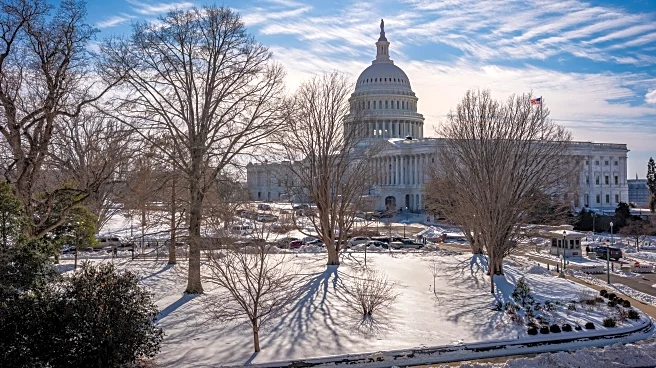

What's Happening?
A partial government shutdown is underway in the United States as Congress struggles to pass a funding bill. Key federal agencies, including the Pentagon and Departments of Transportation, State, and Education,
are affected by the lapse in funding. The Senate has advanced a bill to reopen these agencies, but it faces challenges in the House. Speaker Mike Johnson is optimistic that the shutdown will end by Tuesday, but political divisions over Department of Homeland Security reforms and election integrity legislation are complicating negotiations. The shutdown's impact is being felt by federal workers and the public, with essential services at risk of disruption.
Why It's Important?
Government shutdowns have significant implications for federal employees, public services, and the economy. The current shutdown affects only some agencies, but prolonged negotiations could lead to broader disruptions. The political standoff highlights deep divisions in Congress over immigration policy and election security, issues that have far-reaching consequences for national security and civil liberties. The outcome of these negotiations will set a precedent for future budgetary and policy debates, influencing the legislative agenda and public trust in government institutions.
What's Next?
As negotiations continue, the focus will be on reaching a compromise that satisfies both parties. The House is expected to vote on the Senate's funding package, but disagreements over DHS reforms and election legislation could delay progress. Federal workers are preparing for the possibility of an extended shutdown, which could impact their livelihoods and public services. The resolution of this shutdown will depend on the willingness of lawmakers to find common ground on contentious issues, with potential implications for upcoming elections and policy priorities.