







What's Happening?
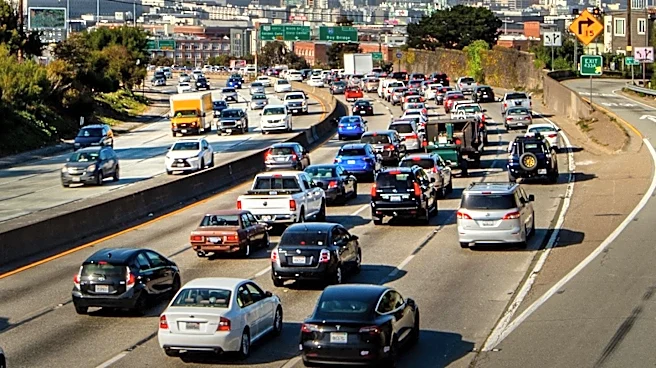
San Francisco utilizes a 'Sigalert' system to notify commuters of significant traffic incidents that are expected to cause delays exceeding thirty minutes. This system, originally developed in Los Angeles in the 1950s, has been adapted for San Francisco's
complex urban and multimodal transportation network. Sigalerts are triggered by various events, including major collisions, structural incidents like failed traffic signals, large-scale public events or protests, emergency medical responses, and weather-related hazards. These alerts are disseminated through navigation apps, highway message signs, and local news broadcasts, acting as a central nervous system for the region's traffic management. The process begins with reports from Caltrans district staff, law enforcement, or transportation centers, which are then verified and entered into the state’s integrated traffic reporting system to trigger automated notifications.
Why It's Important?
The Sigalert system is crucial for San Francisco's urban mobility, directly impacting the daily lives of thousands of commuters and the efficiency of regional commerce. By providing real-time information on significant traffic disruptions, it enables drivers to make informed decisions, choose alternate routes, or delay travel, thereby mitigating widespread gridlock and reducing commute times. This system is vital for businesses that rely on timely transportation of goods and services, as unexpected delays can lead to significant economic losses. Furthermore, Sigalerts play a critical role in public safety by alerting emergency services to incidents and helping to manage traffic flow around accident sites. The system's effectiveness in managing traffic chaos directly influences productivity, environmental impact through reduced idling, and overall quality of life for residents.
What's Next?
The Sigalert system in San Francisco is anticipated to evolve with the integration of smart city technologies, aiming for greater automation and personalization. Future developments may include connected vehicle systems delivering lane-specific warnings and adaptive routing directly to onboard navigation. Mobile applications are expected to incorporate predictive modeling, utilizing historical data to alert drivers of potential Sigalerts before incidents fully unfold. These advancements aim to shift the focus from reactive response to proactive traffic management, enhancing reliability across the region’s complex traffic network. Transportation planners will continue to analyze Sigalert patterns to identify chronic issues, justify infrastructure investments, and coordinate with public agencies on long-term solutions for urban design and mobility.
Beyond the Headlines
Beyond its immediate function of traffic management, the Sigalert system in San Francisco highlights broader implications for urban planning and technological integration. The continuous data collected from Sigalerts provides invaluable insights into the systemic strains on the city's transportation infrastructure, such as aging bridges, bottleneck intersections, or insufficient public transit capacity. This data serves as a critical feedback loop for policymakers and urban planners, influencing decisions on infrastructure development and public transit expansion. The evolution towards predictive modeling and personalized alerts also raises questions about data privacy and the ethical use of real-time location information. Moreover, the system underscores the increasing reliance on technology to manage complex urban challenges, reflecting a global trend towards smart cities and data-driven governance.