






What's Happening?
U.S. Agriculture Secretary Brooke Rollins recently visited Racine County to discuss the ongoing issue of rising beef prices and the state of the U.S. cattle industry. Rollins highlighted the strong global demand for American beef, stating, “America grows
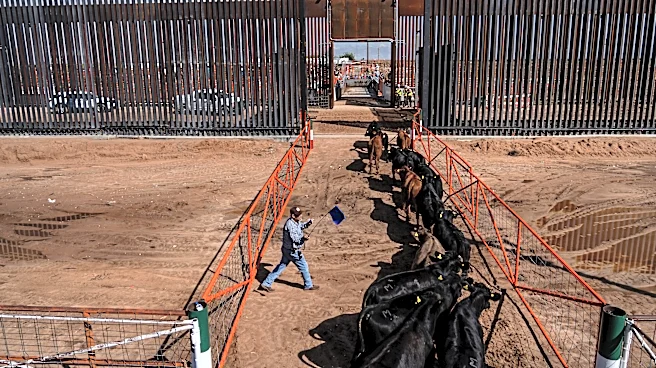
the best beef in the world. Our genetics are extraordinary. Everyone wants American beef.” This strong demand, coupled with a limited domestic cattle supply, is contributing to higher prices for consumers. According to the U.S. Bureau of Labor Statistics, beef and veal prices increased by 5.9% nationwide in August compared to the previous year, with ground beef prices seeing a 7.2% rise. President Trump announced a 90-day waiver of out-of-quota tariffs on up to 300,000 metric tons of imported ground beef in August, a temporary measure aimed at providing short-term price relief for consumers. However, the National Cattlemen’s Beef Association criticized this move, arguing that increased imports could undermine domestic producers and hinder efforts to rebuild the U.S. cattle herd. Max Wenck, owner of Wenck Family Farms, echoed this sentiment, stating that it will take considerable time to rebuild cattle herds and that imports will not immediately resolve the supply shortage.
Why It's Important?
The current situation in the U.S. beef market has significant implications for both consumers and the agricultural sector. For consumers, the sustained increase in beef prices, particularly for ground beef, directly impacts household budgets and food costs. The strong demand for American beef globally, while beneficial for producers in terms of market value, exacerbates the supply shortage domestically, contributing to these elevated prices. The debate over importing beef highlights a tension between immediate consumer relief and long-term support for domestic producers. While President Trump's administration aims to lower prices through temporary tariff waivers on imports, the National Cattlemen’s Beef Association argues this could disincentivize U.S. ranchers from expanding their herds, thereby prolonging the supply issue. The ability of U.S. ranchers to rebuild their herds is crucial for stabilizing prices and ensuring a robust domestic food supply in the future. The current challenges, including drought and high feed costs, further complicate herd rebuilding efforts, making the industry's recovery a slow and complex process.
What's Next?
The 90-day waiver on out-of-quota tariffs for imported ground beef, announced by President Trump, is a short-term measure set to expire. The effectiveness of this policy in significantly reducing consumer prices will be closely monitored, though some industry experts anticipate a limited impact on overall availability and prices. The National Cattlemen’s Beef Association and individual ranchers will likely continue to advocate for policies that support domestic production and herd rebuilding, rather than relying on imports. The long-term trajectory of beef prices and supply will depend on several factors, including weather conditions affecting grazing and feed costs, and the financial incentives for ranchers to retain heifers and expand their herds. The U.S. Department of Agriculture's forecasts suggest that prices will remain strong for the foreseeable future, as rebuilding the herd is a multi-year process. Future discussions will likely focus on balancing consumer affordability with the sustainability and profitability of the U.S. cattle industry.
Beyond the Headlines
The challenges facing the U.S. cattle industry extend beyond immediate price fluctuations and import policies, touching upon deeper issues of agricultural resilience and food security. The contraction of the U.S. cattle herd to its smallest size since 1951, driven by factors like drought and high feed costs, underscores the vulnerability of the food supply chain to environmental and economic pressures. The reliance on imports, even as a temporary measure, raises questions about the long-term self-sufficiency of the U.S. in beef production. Furthermore, the strong global demand for American beef highlights the country's position in the international agricultural market, but also creates a dynamic where domestic consumers compete with international buyers for a limited supply. This situation could lead to a re-evaluation of agricultural policies to better support domestic producers in times of scarcity, ensuring that the U.S. can meet its own food demands while also participating in global trade. The ethical considerations of supporting domestic ranchers versus providing immediate, potentially cheaper, imported goods to consumers will remain a central theme in policy discussions.