

What's Happening?
Latvian startup Deep Space Energy has successfully raised €930,000 in a pre-seed funding round to develop a novel radioisotopic generator aimed at generating electricity on the Moon. The funding includes €350,000 from Outlast Fund and angel investor Linas
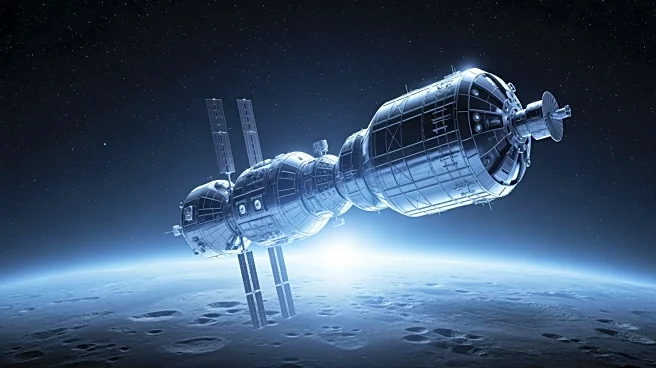
Sargautis, as well as €580,000 from public contracts and grants by the European Space Agency, NATO Diana, and the Latvian government. The company is focused on creating a power generator that uses radioisotopes, derived from nuclear waste, to produce heat through natural decay, which is then converted into electric power. This technology is intended to enhance the resilience of strategic satellites by providing a backup power source that does not rely on solar energy, crucial for military reconnaissance assets. The generator is not designed for weapons but aims to support high-value, dual-use satellites.
Why It's Important?
The development of this technology is significant for the European space and defense sectors, as it aims to reduce reliance on U.S. defense space assets. The radioisotope-based generator could enhance the operational reliability of satellites, which are vital for military reconnaissance and early-warning systems. This innovation could also play a crucial role in the Moon economy, supporting lunar exploration missions by providing a reliable power source during the long lunar nights. The efficiency of the generator, requiring less radioisotope fuel than current systems, could accelerate the timeline for commercial lunar activities and resource utilization, potentially leading to significant cost savings in space exploration.
What's Next?
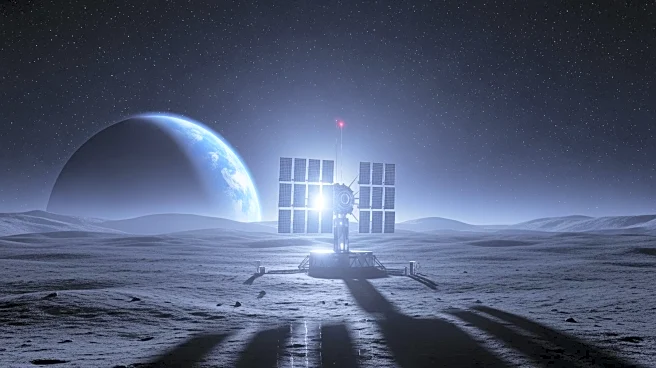
Deep Space Energy plans to focus on the Moon economy, addressing energy challenges in lunar exploration programs such as NASA and ESA's Artemis and Argonaut missions. The company aims to support lunar night survival and operations in permanently shadowed regions, enabling extended scouting and prospecting missions. The technology's efficiency could allow lunar exploration missions to begin earlier and at a higher volume than previously expected. As Europe seeks to become more independent in space capabilities, this technology could play a pivotal role in establishing a robust European presence in space exploration and defense.