
What's Happening?
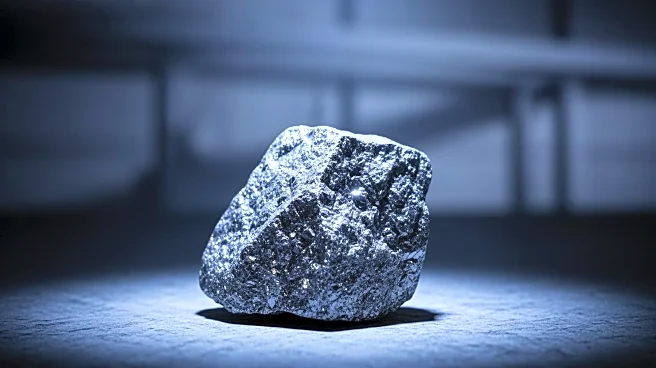
The Sangdong mine in South Korea, one of the world's largest deposits of tungsten, is set to become a crucial supplier of this critical mineral to the United States. Tungsten, known for its ability to withstand
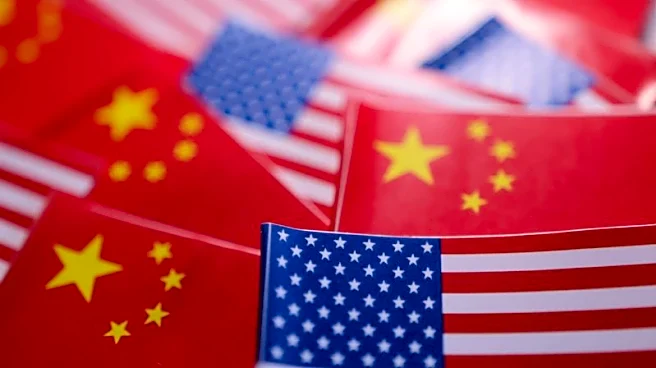
high temperatures, is essential for various defense applications, including tanks, fighter jets, and missile guidance systems. Almonty Industries, the company operating the mine, has reopened it after a 30-year closure due to competitive pricing from China. The U.S. is seeking alternative sources for critical minerals as China currently dominates the market and has previously threatened to cut off supplies during trade tensions. Lewis Black, CEO of Almonty Industries, has assured the U.S. government of a steady supply of tungsten, emphasizing its importance for national security.
Why It's Important?
The reopening of the Sangdong mine is significant for U.S. national security and technological independence. Tungsten is vital for defense and technology sectors, and reliance on China for such critical minerals poses strategic risks. By securing a supply from South Korea, the U.S. aims to mitigate potential supply chain disruptions and reduce dependency on Chinese exports. This move aligns with broader efforts to diversify sources of critical minerals, ensuring that the U.S. can maintain its defense capabilities and technological advancements without external pressures. The partnership with South Korea also strengthens bilateral relations and economic ties between the two nations.
What's Next?
Once fully operational, the Sangdong mine is expected to produce 1.2 million tons of tungsten ore annually, providing a long-term supply to the U.S. This development may prompt further exploration of similar partnerships with other countries possessing critical mineral resources. The U.S. government and defense contractors will likely continue to seek diversified supply chains to safeguard against geopolitical risks. Additionally, this could lead to increased investment in domestic mining and processing capabilities to further enhance self-sufficiency in critical mineral supplies.