





What's Happening?
The San Juan National Forest has successfully acquired 320 acres of ecologically significant wildlife habitat within the Dolores Ranger District. This acquisition, completed in November 2026, was a collaborative effort between the U.S. Forest Service
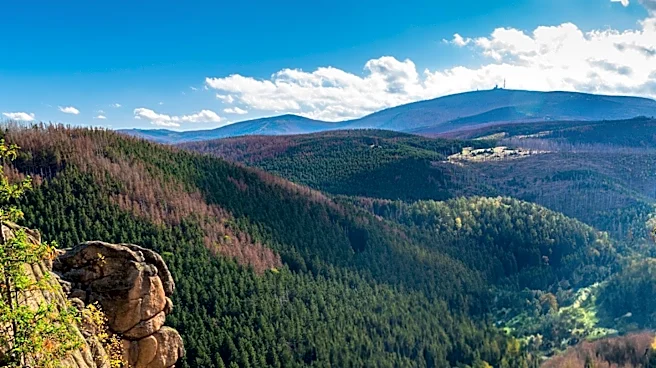
and The Conservation Fund, initiated in January 2024. The newly protected land, located approximately seven miles north of Rico, Colorado, is less than a quarter-mile from the Lizard Head Wilderness. It provides crucial habitat for a diverse range of wildlife, including golden eagles, elk, black bears, Canada lynx, and gray wolves, and maintains key migration routes for several species. The parcel also contains approximately 67 acres of wetlands, which are vital for carbon sequestration and watershed health, supplying municipal water to over 26,000 downstream residents. The project received broad support from various governmental, community, conservation, and recreation organizations, including Senators Michael Bennet and John Hickenlooper, The Ute Mountain Ute Tribe, and The Southern Ute Indian Tribe.
Why It's Important?
This acquisition is significant for several reasons, primarily for its environmental and ecological benefits. It safeguards sensitive wildlife habitat, ensuring the preservation of biodiversity and critical migration corridors in the region. The protection of wetlands within the parcel contributes to carbon sequestration efforts and enhances watershed functions, which are essential for maintaining water quality and supply for local communities. Furthermore, bringing this land into public ownership prevents future development, thereby preserving the area's natural character and expanding public access for recreational activities such as hiking, hunting, and backpacking. From a wildfire management perspective, integrating this parcel into the national forest allows for more consistent management with surrounding lands, improving operational efficiency during wildfire events and reducing the resources needed to protect private structures within inholdings. The broad bipartisan and community support for this project underscores the shared value placed on conservation and public land access.
What's Next?
With the acquisition finalized, the San Juan National Forest will integrate the 320 acres into its existing management plans for the Dolores Ranger District. This will involve ongoing efforts to manage the land for wildlife habitat protection, watershed health, and public recreational access. The Forest Service will likely continue to monitor the ecological health of the area, including its wetlands and wildlife populations. Future management strategies may also focus on wildfire prevention and response within the newly acquired parcel, aligning it with broader forest-wide initiatives. The successful collaboration between the U.S. Forest Service and The Conservation Fund could serve as a model for future land conservation efforts, potentially leading to similar partnerships aimed at expanding public lands and protecting critical ecosystems across the nation.
Beyond the Headlines
The acquisition of the Lizard Head Mesa inholding highlights a broader trend in conservation efforts that emphasize strategic land purchases to consolidate public lands and protect vital ecological corridors. This approach not only preserves natural landscapes but also enhances the resilience of ecosystems against climate change by protecting wetlands that are naturally resilient to environmental shifts and contribute to carbon sequestration. The project also underscores the importance of collaborative conservation, demonstrating how partnerships between federal agencies, non-profit organizations, and diverse community stakeholders, including Native American tribes, can achieve significant environmental outcomes. This collective action reflects a growing recognition of the interconnectedness of ecological health, community well-being, and economic benefits derived from protected natural resources, setting a precedent for future conservation initiatives that prioritize both environmental integrity and public access.