
What's Happening?
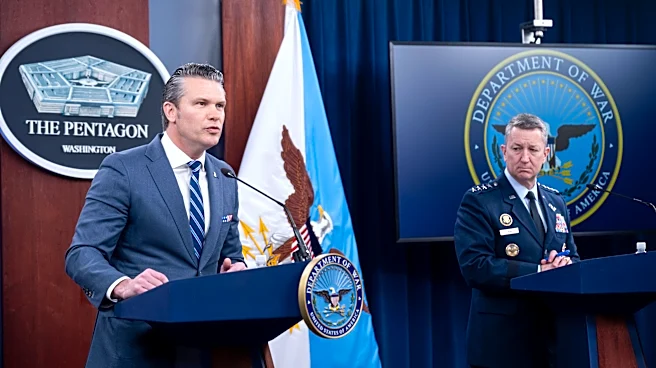
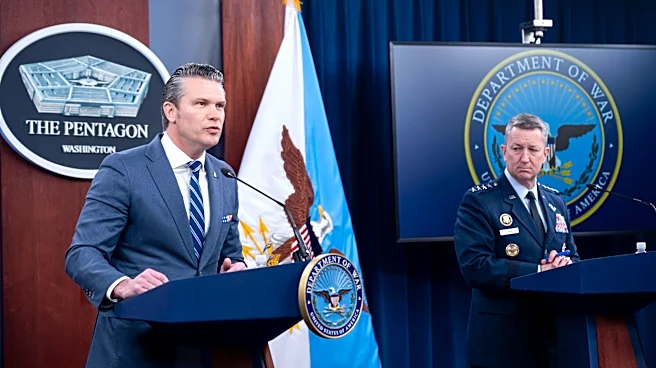
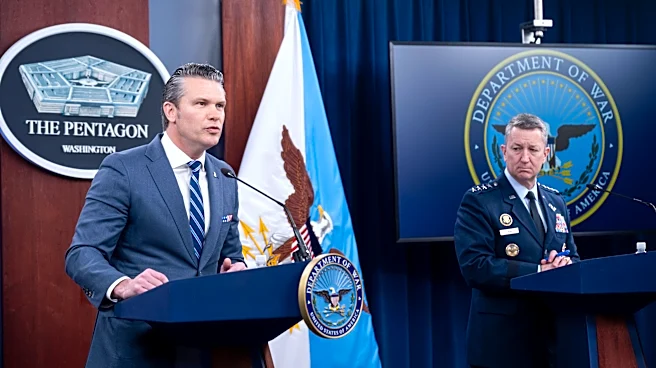
The Pentagon has reported an expenditure of $25 billion in the first 60 days of military operations against Iran. This information was disclosed during a congressional hearing where Jay Hurst, acting as the Pentagon's
chief financial officer, testified about the Department of Defense's budget for 2027. The administration plans to request additional funds from Congress to cover munitions and operational costs. The hearing also marked the first public questioning of Defense Secretary Pete Hegseth and Gen. Dan Caine since the onset of Operation Epic Fury. Lawmakers expressed concerns about the Pentagon's budget increase and the strategic direction of the conflict with Iran, especially given the ongoing blockade of the Strait of Hormuz and Iran's continued nuclear ambitions.
Why It's Important?
The financial and strategic implications of the Iran conflict are significant for U.S. defense policy and international relations. The $1.5 trillion defense budget proposal for 2027, which includes a 50% increase over the previous year, aims to modernize and expand U.S. military capabilities. However, there is skepticism about the Pentagon's ability to effectively manage such a substantial budget increase. The conflict with Iran, described by some lawmakers as a potential 'quagmire,' raises questions about the U.S.'s long-term strategic objectives and the potential for further geopolitical instability. The economic impact of the conflict, particularly on global oil markets due to the Strait of Hormuz blockade, could have far-reaching consequences.
What's Next?
The administration is expected to submit a supplemental budget request to Congress to address the financial demands of the ongoing conflict. Lawmakers are likely to continue scrutinizing the Pentagon's spending and strategic plans, particularly in light of the high costs and uncertain outcomes of the Iran operations. The situation in the Middle East remains volatile, and the U.S. may face increased pressure to clarify its objectives and strategies. The potential for diplomatic negotiations with Iran could alter the course of the conflict, but as of now, no agreements have been reached.
Beyond the Headlines
The conflict with Iran highlights broader issues of military accountability and strategic planning within the U.S. government. The Pentagon's ability to manage and justify its budget is under scrutiny, with concerns about transparency and efficiency. The geopolitical ramifications of the conflict extend beyond military considerations, affecting global economic stability and U.S. diplomatic relations. The situation underscores the challenges of balancing military readiness with fiscal responsibility and strategic clarity.