


What's Happening?
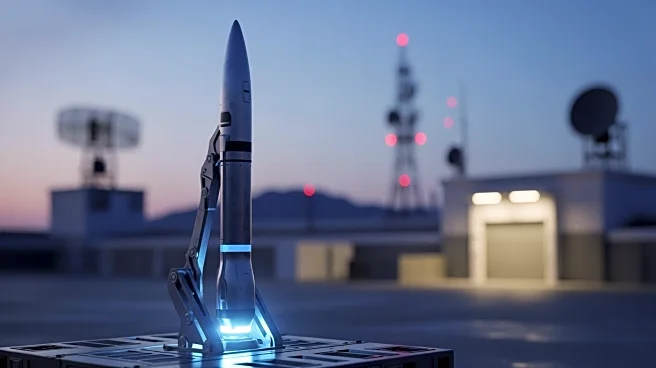
Lockheed Martin and the US Department of Defense (DoD) have agreed on a new framework to significantly increase the production of Terminal High Altitude Area Defense (THAAD) interceptors. This agreement aims to quadruple the annual output from 96 to 400
units. The initiative is part of the DoD's Acquisition Transformation Strategy, which seeks to reform defense procurement processes. Lockheed Martin plans to invest billions over the next three years to modernize facilities across several states, including Arkansas and Texas, to support this production increase. The THAAD system, designed to intercept various ballistic missile threats, has proven effective in recent operations and continues to receive capability upgrades. This expansion is expected to create more jobs and enhance the US military's deterrence capabilities.
Why It's Important?
The expansion of THAAD interceptor production is crucial for maintaining and enhancing the US military's defensive capabilities against potential missile threats. By increasing the availability of these interceptors, the US aims to deter adversaries and strengthen its strategic defense posture. The investment in modernizing production facilities will also boost the defense manufacturing sector, potentially creating thousands of jobs and contributing to economic growth in the regions involved. This move aligns with broader defense strategies to ensure the US and its allies are well-equipped to handle emerging global security challenges.
What's Next?
Lockheed Martin will begin constructing a Munitions Acceleration Centre in Camden, Arkansas, utilizing advanced manufacturing technologies to support the increased production of THAAD and other critical munitions. The company plans to continue upgrading its facilities and manufacturing techniques to meet the growing demand. As production ramps up, the US military will likely deploy additional THAAD systems at strategic locations domestically and internationally, enhancing its missile defense capabilities. The ongoing modernization efforts will also focus on integrating new technologies to improve the effectiveness and reliability of the THAAD system.