
What's Happening?
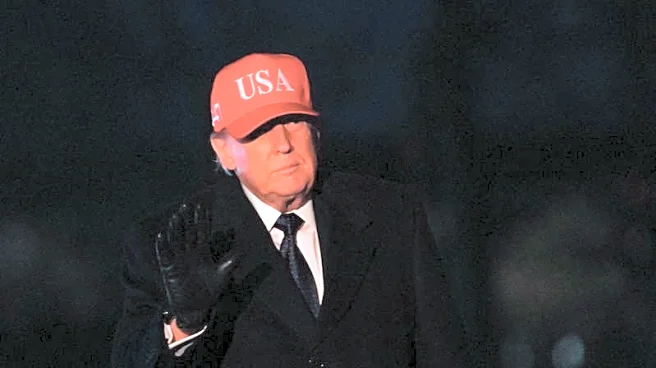
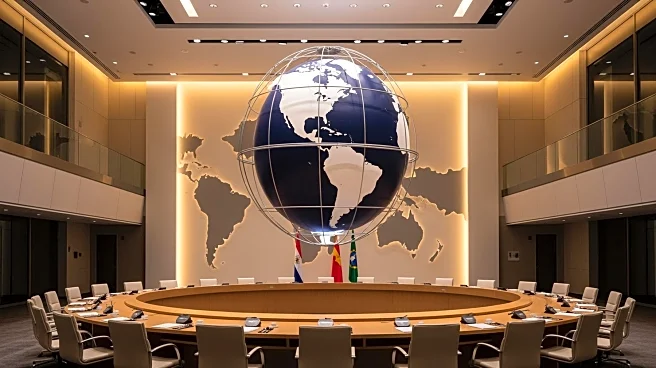
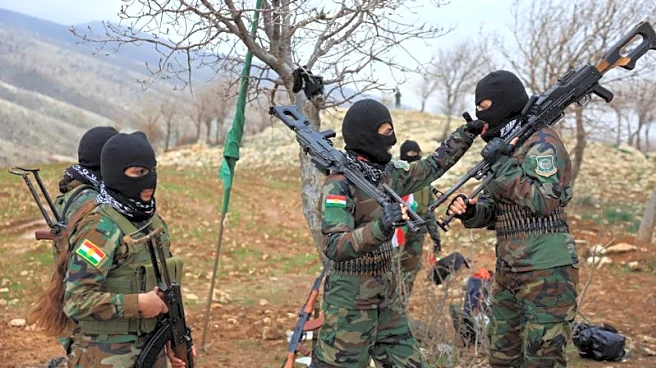
President Trump has called for a united military effort against drug cartels and transnational gangs in Latin America, emphasizing the threat they pose to national security in the Western Hemisphere. Speaking at the 'Shield of the Americas' summit held
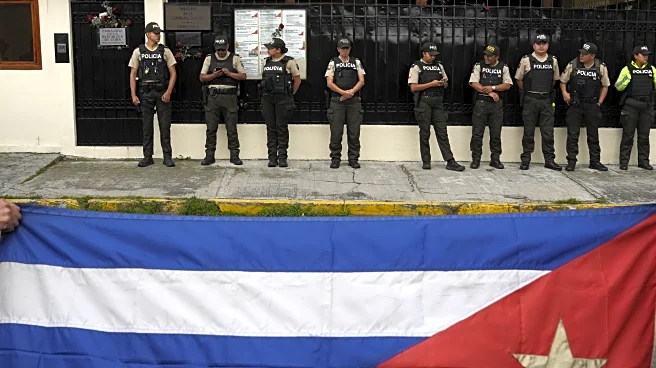
at his golf resort in Doral, Florida, Trump urged regional leaders to deploy military forces to combat these groups, drawing parallels to the U.S.-led coalition against the Islamic State in the Middle East. The summit, attended by leaders from several Latin American countries, comes amid ongoing U.S. military engagements in the Middle East, including a recent conflict with Iran. Trump also indicated a shift in focus towards Cuba, suggesting potential diplomatic negotiations post-conflict with Iran.
Why It's Important?
The call for military action against cartels highlights the U.S. administration's focus on strengthening security and countering organized crime in the Western Hemisphere. This approach aligns with Trump's broader foreign policy strategy to reassert U.S. influence in the region and counteract Chinese economic activities. The emphasis on military solutions reflects a significant shift from traditional diplomatic and law enforcement strategies, potentially impacting U.S. relations with Latin American countries. The proposed actions could lead to increased military cooperation and influence in the region, affecting local governance and security dynamics.
What's Next?
Following the summit, the U.S. and Ecuador have already initiated joint military operations against organized crime groups. This could set a precedent for further military collaborations in the region. The focus on Cuba suggests potential diplomatic engagements, contingent on the resolution of the conflict with Iran. The U.S. administration's stance may provoke varied reactions from Latin American countries, with some supporting military interventions while others may resist, prioritizing sovereignty and diplomatic solutions. The evolving geopolitical landscape will likely influence future U.S. foreign policy and regional alliances.