







What's Happening?
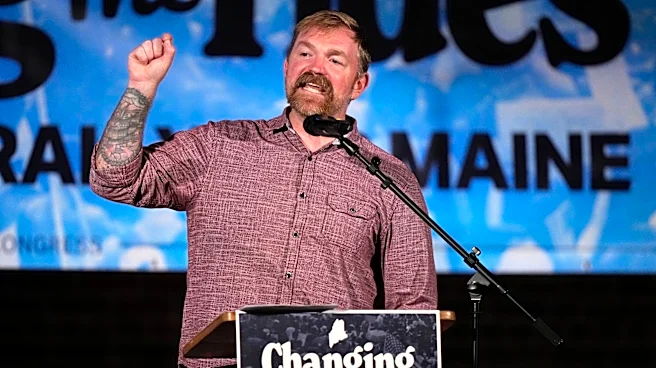
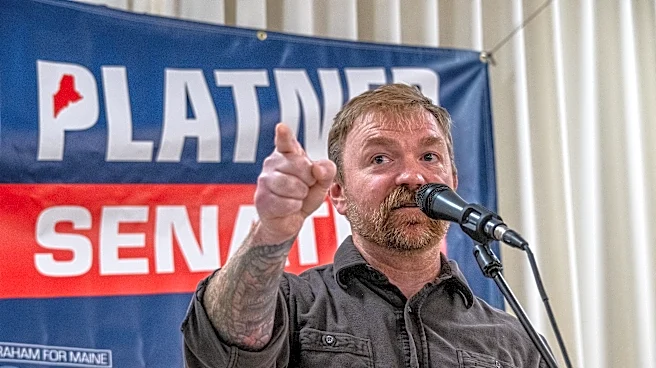
Graham Platner, a Marine Corps veteran and oyster farmer, has made history by receiving more primary votes than any other Democratic U.S. Senate candidate in Maine's history. According to data from the Associated Press, Platner secured over 150,000 votes,
surpassing all previous records since Maine began electing U.S. Senators by popular vote in 1918. His vote count also exceeded the combined total of all eight Republican gubernatorial candidates, with more than 90% of the votes counted. The high turnout in the Democratic primary was partly attributed to Maine's semi-open primary system, which allows unenrolled voters to participate. Over 18,000 unenrolled voters cast absentee ballots, with 75% voting in the Democratic primary. Platner won every town in Maine except for Hersey, Moose River, and Weston, which were won by Governor Janet Mills.
Why It's Important?
Platner's record-breaking primary victory highlights a significant shift in voter engagement and political dynamics in Maine. The high turnout and support for Platner suggest a strong Democratic momentum in the state, which could influence the upcoming general elections. The semi-open primary system played a crucial role in this outcome, indicating that independent voters are increasingly participating in Democratic contests. This trend could have broader implications for future elections, potentially reshaping party strategies and voter outreach efforts. Platner's success also underscores the appeal of candidates with military backgrounds and grassroots connections, which may resonate with a diverse electorate seeking change in Washington.
What's Next?
As Platner moves forward to the general election, his campaign will likely focus on maintaining the momentum gained during the primaries. The Democratic Party may leverage this victory to galvanize support and resources for the upcoming electoral battle. Meanwhile, Republican candidates will need to reassess their strategies to counter the Democratic surge. The outcome of this election could influence national political narratives, especially if Platner's approach proves successful in attracting a broad coalition of voters. Observers will be watching closely to see how Platner's campaign evolves and how it impacts the political landscape in Maine and beyond.