






What's Happening?
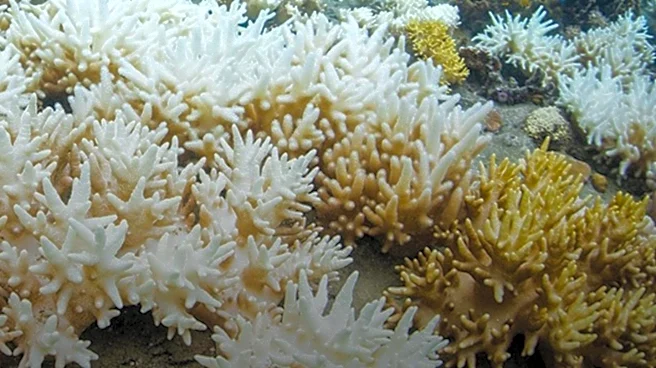
A new study published in Oceanography by Climate Central researchers has found that human-induced climate change is the primary driver of global coral bleaching events over the past four decades. The study challenges the previous assumption that natural
climate cycles, such as El Niño, were the main causes of coral bleaching. Instead, it concludes that greenhouse gas emissions have significantly warmed the oceans, making El Niño a trigger rather than the root cause of bleaching. The research indicates that every global bleaching event since 1998 required human-caused warming to push ocean temperatures beyond bleaching thresholds. The findings highlight the increasing frequency and severity of coral bleaching due to steadily warming oceans.
Why It's Important?
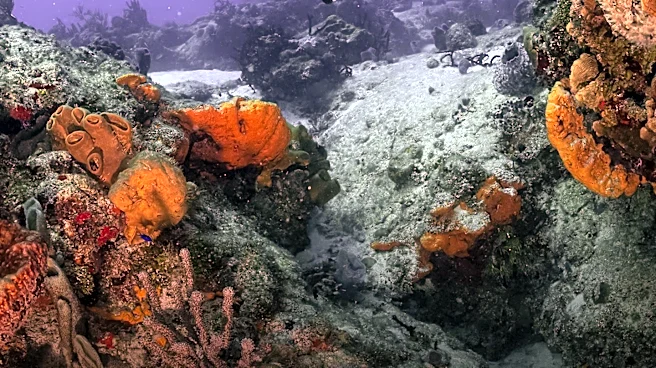
The study's findings have significant implications for global marine ecosystems and the communities that depend on them. Coral reefs support a vast array of marine life and provide critical ecosystem services, including fisheries, tourism, and coastal protection. The degradation of coral reefs due to bleaching threatens biodiversity and the livelihoods of millions of people worldwide. The research underscores the urgent need for global efforts to reduce greenhouse gas emissions and mitigate climate change impacts. It also highlights the importance of protecting and restoring coral reefs to enhance their resilience against warming oceans.
What's Next?
The study suggests that without significant reductions in carbon emissions, coral bleaching events will become more frequent and severe. Policymakers and environmental organizations may use these findings to advocate for stronger climate action and conservation efforts. Additionally, the research could inform strategies to enhance coral reef resilience, such as reducing local stressors like overfishing and pollution. The study also calls for increased monitoring and research to better understand and address the impacts of climate change on marine ecosystems.