




What's Happening?
Direct military cooperation between Iran and Russia, two significant adversaries of the United States, has intensified, presenting a new strategic challenge to Western nations. This partnership has evolved from a limited alliance of convenience to a deep
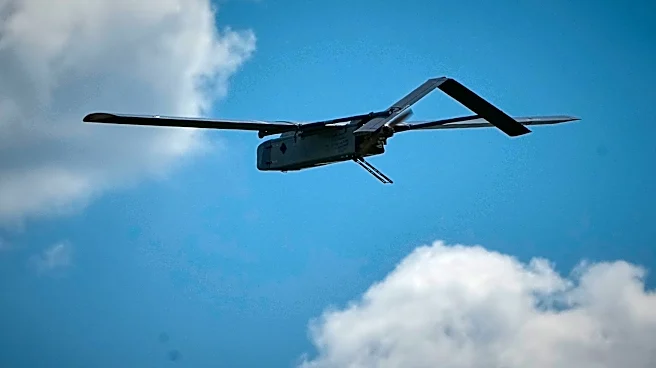
economic and military collaboration, driven by ongoing conflicts in Ukraine and the Middle East. The report highlights that knowledge transfer is as crucial as weapons sales, enabling Russia to produce thousands of Shahed drones monthly and allowing Iran to reverse-engineer improvements made to systems sold to Moscow. The cooperation spans joint production facilities, such as the Shahed drone factory in Alabuga, Russia, and includes the exchange of technical expertise, sanctions evasion schemes, and the sharing of proprietary technical information on weaponry. This collaboration has seen Russia indigenize much of its drone production, even exporting advanced Geran variants back to Iran, and has involved proxies like Hezbollah in training and smuggling operations.
Why It's Important?
This deepening military alliance between Iran and Russia has profound implications for U.S. national security and global stability. The proliferation of advanced weapon systems, particularly low-cost drones, to American adversaries and their proxies increases the threat to U.S. forces, allies, and partners worldwide. The ability of these nations to circumvent international sanctions through sophisticated smuggling networks and dual-use technology acquisition undermines global non-proliferation efforts. The report emphasizes that this partnership allows Moscow to secure access to Iranian weapon systems for use against Ukraine, while Tehran gains technical assistance, a partner in sanctions evasion, and access to upgraded versions of its own weapon systems. This collaboration also enables the sharing of battlefield tactics and intelligence, potentially enhancing the effectiveness of attacks against U.S. interests and personnel in various theaters, as seen with the alleged provision of targeting data to Iran during Operation Epic Fury.
What's Next?
The U.S. government is recommended to employ diplomatic and economic tools to restrict Chinese support for Iranian and Russian weapon programs. This includes focusing on securing American and partner supply chains and preventing dual-use Chinese items from fueling the Russian-Iranian defense industrial base. Strengthening U.S. ties with Caspian Sea littoral states and assisting allies in developing strategies to deter and interdict weapon smuggling efforts are also crucial next steps. Furthermore, the U.S. must prepare to defend its homeland, military assets abroad, and partners against a proliferated, low-cost drone threat. The report suggests that this mutually beneficial partnership is likely to continue as long as it provides both parties with illicit funding, advanced weapon systems, and access to emerging technologies, indicating a sustained challenge for U.S. foreign policy and defense strategies.
Beyond the Headlines
The Iran-Russia military partnership represents a significant shift in global power dynamics, moving beyond traditional state-to-state alliances to a more integrated defense industrial ecosystem. This collaboration challenges the effectiveness of existing international sanctions regimes and highlights the limitations of conventional deterrence strategies. The reliance on dual-use components and complex smuggling networks underscores the need for innovative counter-proliferation measures that target not just finished weapons but also their supply chains and financial facilitators. The involvement of proxies like Hezbollah further complicates the landscape, blurring the lines between state and non-state actors in global conflicts. This evolving partnership could lead to a more multipolar world order, where adversaries are increasingly capable of circumventing Western technological superiority and economic pressure, necessitating a re-evaluation of U.S. strategic approaches to global security.