




What's Happening?
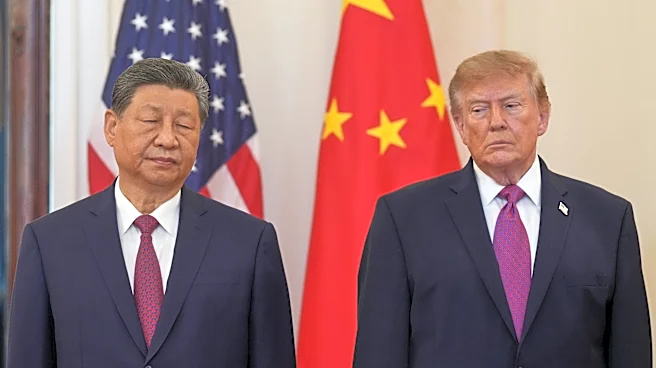
China has consistently refused to join the United States in imposing economic sanctions against Iran, despite having a significantly larger trade volume with the U.S. than with Iran. This stance is not solely based on trade figures, but rather on Iran's
strategic importance to Beijing's security and geopolitical calculations. Iran's geographical position in West Asia, connecting Central Asia and Afghanistan while providing access to the Persian Gulf and Gulf of Oman, makes it a crucial element in China's strategy for alternative trade routes to the West. Furthermore, China views Central Asia, adjacent to its Xinjiang region, as a strategic and security hinterland, and Iran plays a role in securing this western flank. The potential for instability in Iran could impact the security of China's trade routes and its broader strategic environment. China's relationship with Iran is therefore seen as part of a larger equation involving the security of its western borders, trade routes, energy access, and the strategic significance of the Strait of Hormuz.
Why It's Important?
China's refusal to align with U.S. sanctions against Iran has significant implications for U.S. foreign policy and its efforts to exert economic pressure on nations. This divergence highlights the limitations of U.S. unilateral sanctions when major global powers like China prioritize their own strategic interests. For the U.S., China's position complicates efforts to isolate Iran and could undermine the effectiveness of its sanctions regime. It also underscores the ongoing geopolitical competition between the U.S. and China, with Central Asia becoming a region where both powers are expanding their influence. China's actions demonstrate a commitment to diversifying its partnerships and securing its economic and security interests independently of U.S. foreign policy objectives, potentially leading to a more multipolar international system where U.S. influence is challenged.
What's Next?
The continued divergence between China and the U.S. on Iran sanctions suggests that Beijing will likely maintain its independent foreign policy regarding the Middle East. This could lead to further strain in U.S.-China relations, particularly as the U.S. seeks to maintain its global leadership. China may continue to deepen its strategic cooperation with Iran, potentially in areas such as the aviation industry, space technologies, and advanced microelectronics, as a means of strengthening its geopolitical position and securing its trade routes. The U.S. may need to re-evaluate its approach to sanctions and international alliances, potentially seeking new strategies to address its concerns about Iran while navigating the complexities of great power competition. The 'Trump Route' mentioned in the source, if implemented, could also reshape transportation and connectivity in the region, further influencing China's trade routes and strategic considerations.
Beyond the Headlines
The situation extends beyond immediate economic and political considerations, touching upon the evolving global order and the challenges to U.S. hegemony. China's actions reflect a broader trend of nations seeking to reduce dependency on a single dominant power and to forge multilateral partnerships based on their own national interests. This could lead to a more fragmented international system where economic and security alliances are more fluid and less dictated by traditional power blocs. The ethical implications of sanctions, particularly their impact on civilian populations, also come into play, as China's stance implicitly questions the efficacy and fairness of such measures. Furthermore, the competition for influence in Central Asia and the Middle East highlights the critical role of energy security and trade routes in shaping 21st-century geopolitics, with nations like China actively working to secure these vital lifelines.