
What's Happening?
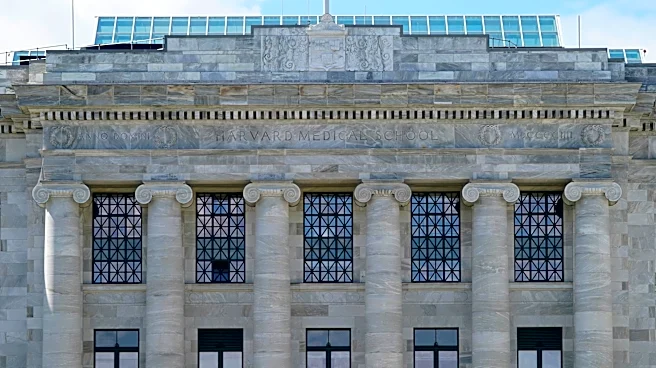
Harvard Medical School has agreed to a $53 million settlement to resolve lawsuits stemming from the theft and sale of human body parts from its morgue. This class-action settlement received preliminary
approval from a state court judge in Boston on Tuesday. The lawsuits arose from a scheme between 2018 and 2022, where former Harvard morgue manager Cedric Lodge, his wife, and other individuals were involved in the trade of human remains donated for medical research. The Massachusetts Supreme Judicial Court previously reversed an initial dismissal of the lawsuits, ruling that Harvard did not act in good faith due to its "extraordinary failure to adequately supervise" the morgue. Harvard officials, including Dean of the Faculty of Medicine George Daley and Dean for Medical Education Bernard Chang, expressed deep sorrow for the families of the donors affected by the scandal, calling the former manager's actions "despicable, abhorrent, and a flagrant betrayal of our values."
Why It's Important?
This settlement underscores the critical importance of institutional oversight and accountability, particularly in sensitive areas like anatomical gift programs. The Massachusetts Supreme Judicial Court's finding that Harvard failed to adequately supervise its morgue highlights a significant lapse in institutional responsibility. For the families of the donors, this settlement provides a measure of justice and acknowledgment of the profound distress caused by the desecration of their loved ones' remains. It also serves as a stark reminder to other educational and medical institutions about the ethical and legal obligations associated with handling human remains. The case could lead to increased scrutiny and potentially stricter regulations for anatomical gift programs nationwide, aiming to prevent similar incidents and restore public trust in such vital research and educational initiatives.
What's Next?
Following the preliminary approval, a third-party Settlement Administrator will be appointed to manage the distribution of the $53 million in settlement funds. This process will involve notifying potential class members, establishing a website with eligibility information, and providing instructions for submitting claims. Harvard officials anticipate that the entire distribution process will take several months. A final court approval hearing for the settlement is scheduled for December. Additionally, Harvard Medical School plans to establish an annual scholarship starting next year, dedicated "in appreciation and in honor of all of our anatomical donors," as a gesture of respect and acknowledgment for those who contribute to medical education and research.
Beyond the Headlines
The Harvard Medical School body parts scandal and subsequent settlement delve into profound ethical and societal questions surrounding the treatment of human remains and the trust placed in academic institutions. The "ghoulishly dismembered and sold for profit" nature of the crimes, as described by the court, exposes a dark underbelly of illicit trade that exploits the altruism of body donors and their families. This incident not only damaged Harvard's reputation but also raised concerns about the broader integrity of anatomical gift programs. The case highlights the tension between the scientific necessity of anatomical donations and the moral imperative to treat human remains with dignity and respect. It could prompt a re-evaluation of security protocols, ethical guidelines, and oversight mechanisms across all institutions involved in handling human remains, potentially leading to a cultural shift towards greater transparency and accountability in such programs.