





What's Happening?
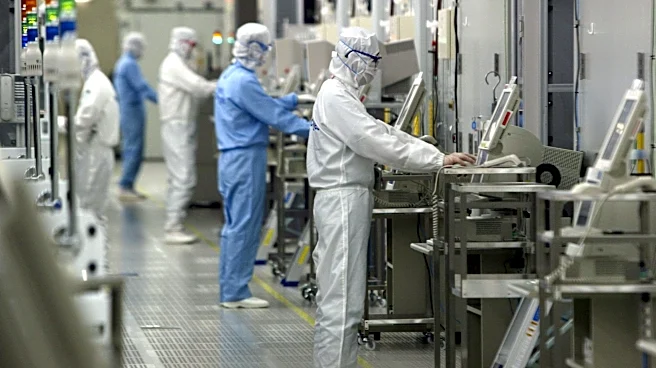
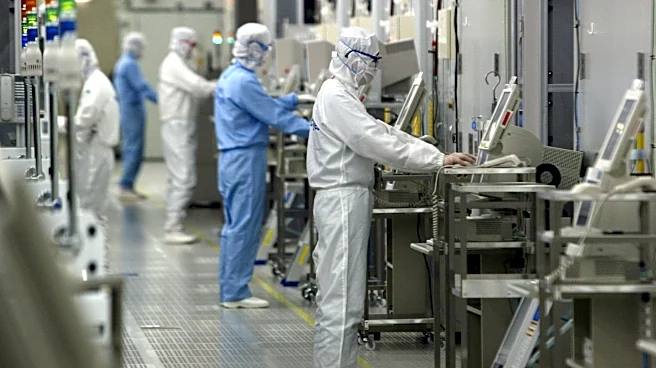
The United States National Science Foundation (NSF) has established the Future of Semiconductors (FuSe) initiative, a competitive research program designed to accelerate breakthroughs in semiconductor hardware, processing, and system architectures. This
program, framed by the national priorities of the CHIPS and Science Act, aims to address the fundamental physical and technological limitations encountered as traditional semiconductor scaling approaches its historical boundaries. The FuSe program emphasizes simultaneous innovation across multiple interdependent technological tiers, rather than isolated component improvements, to advance beyond standard scaling laws. It is managed as a cross-directorate partnership within the NSF, coordinating resources and intellectual oversight across five primary directorates: Engineering (ENG), Computer and Information Science and Engineering (CISE), Mathematical and Physical Sciences (MPS), Technology, Innovation and Partnerships (TIP), and STEM Education (EDU). The initiative operates through competitive solicitations, with FuSe2 under solicitation NSF 24-521, and explicitly requires collaborative teams to pursue 'co-design'—the synergistic formulation of materials, physical devices, and computing architectures—to create compact, power-efficient, robust, and secure microelectronic technologies. Awards provide up to $2,000,000 over three years, with approximately $40,000,000 allocated for FuSe2 to support 15 to 20 multi-investigator teams.
Why It's Important?
The FuSe program is critical for the United States as it directly addresses the nation's strategic need to maintain leadership in semiconductor technology, a sector vital for economic competitiveness and national security. By fostering 'co-design' across materials, devices, and architectures, the initiative aims to overcome current technological bottlenecks and drive innovation that is essential for next-generation computing. This approach ensures that advancements are not siloed but integrated, leading to more efficient and powerful microelectronic systems. The program's focus on workforce development, including structured technical training for students, postdoctoral researchers, and technicians across diverse institutions and community colleges, is crucial for building a skilled domestic talent pipeline. This investment in human capital is essential to support the growth of the U.S. semiconductor industry and reduce reliance on foreign expertise. Furthermore, by supporting academic and non-profit research organizations, FuSe strengthens the foundational research ecosystem, which is a prerequisite for long-term technological leadership and the creation of new industries and jobs within the U.S.
What's Next?
The FuSe program will continue to issue competitive solicitations, with the current FuSe2 under NSF 24-521, inviting proposals from eligible U.S. institutions. Research teams will execute experimental milestones, submit annual reports detailing co-design achievements, and implement educational modules as part of their awards. The program anticipates supporting 15 to 20 multi-investigator teams with total funding of approximately $40,000,000 for FuSe2. Future developments will likely include the evaluation of these research outcomes and their translation into practical applications. The emphasis on workforce development means that educational institutions will continue to integrate microelectronics design and fabrication training into their curricula, preparing a new generation of semiconductor professionals. The success of these projects will be measured by their ability to produce compact, power-efficient, robust, and secure microelectronic technologies, ultimately contributing to the goals outlined in the CHIPS and Science Act.
Beyond the Headlines
The FuSe program's emphasis on 'co-design' represents a significant shift in how semiconductor research and development are approached, moving away from sequential, isolated improvements towards an integrated, holistic strategy. This paradigm shift acknowledges that future advancements in microelectronics require a deep, interdisciplinary collaboration between materials scientists, device engineers, and computing architects. The program also highlights the ethical and strategic implications of semiconductor independence, particularly in an era of increasing geopolitical competition. By investing heavily in domestic research and workforce development, the U.S. aims to secure its supply chains and reduce vulnerabilities to external disruptions. The inclusion of community colleges and minority-serving institutions in eligibility criteria underscores a commitment to broader societal impact, aiming to democratize access to high-tech training and foster a more diverse and inclusive STEM workforce. This long-term vision extends beyond immediate technological gains, aiming to cultivate a sustainable ecosystem for innovation and economic resilience.