
What's Happening?
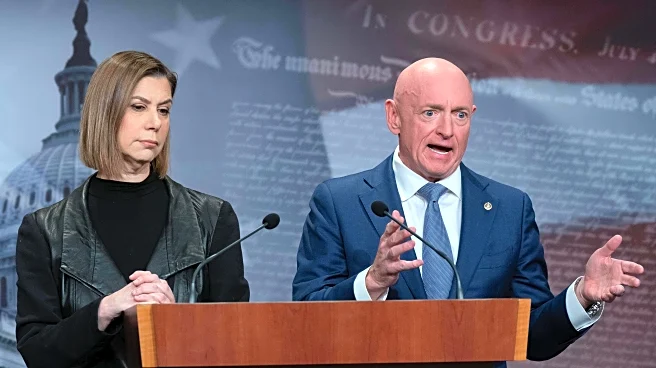
A U.S. District Court judge has dismissed an attempt by Defense Secretary Pete Hegseth to demote Senator Mark Kelly and strip him of veterans benefits. The case arose after Kelly, a former Navy captain and astronaut, reminded active-duty service members
of their right to refuse unlawful orders. Judge Richard Leon ruled that Hegseth's actions violated Kelly's First Amendment rights and threatened the constitutional liberties of military retirees. Leon, appointed by former President George W. Bush, emphasized that the principles limiting First Amendment protections for active servicemembers do not extend to retired servicemembers, especially those in Congress. The judge's decision included a reference to Bob Dylan's song, underscoring the need for respect towards retired veterans.
Why It's Important?
This ruling underscores the protection of First Amendment rights for retired military personnel, particularly those serving in Congress. It highlights the judiciary's role in checking executive actions that may infringe on constitutional liberties. The decision is significant for military retirees, affirming their right to participate in public discourse without fear of retribution. It also serves as a reminder of the judiciary's independence in safeguarding constitutional rights against potential overreach by the executive branch. The case reflects ongoing tensions between military leadership and legislative oversight, particularly in contexts involving controversial military actions.
What's Next?
The ruling may prompt the Defense Department to reassess its approach to handling retired servicemembers who engage in public discourse. It could lead to increased scrutiny of actions perceived as retaliatory against military retirees. The decision may also influence future cases involving the rights of retired military personnel, setting a precedent for how such matters are adjudicated. Political and military leaders might engage in discussions to clarify the boundaries of military and civilian oversight, potentially leading to policy adjustments to prevent similar conflicts.