


What's Happening?
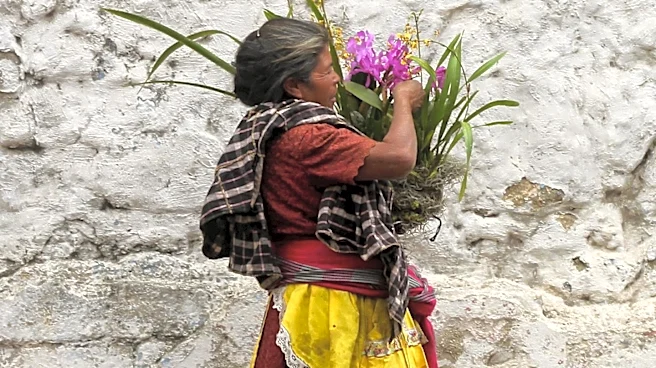
Guatemala, one of Latin America's youngest nations with only 8% of its population over 60 years old, is grappling with a less visible reality: thousands of its elderly citizens lack access to essential services. Many older Guatemalans do not have retirement
benefits, adequate medical care, or dignified housing. This situation was highlighted by María Isabel Grajeda, who founded 'Abuelitos Heladeros' (Grandparent Ice Cream Vendors) after encountering Don Julio, an octogenarian ice cream vendor during the pandemic. Her foundation now supports numerous older adults working in the informal sector, who, according to Grajeda, value feeling that they are contributing something of worth. This initiative underscores the resilience and dignity of these individuals while also drawing attention to the precarious conditions many face in their old age.
Why It's Important?
The challenges faced by elderly Guatemalans reflect broader societal and economic issues within the country, particularly concerning social welfare and support systems for an aging population. While Guatemala's population is predominantly young, the struggles of its older citizens highlight systemic gaps in public policy and social safety nets. The lack of retirement benefits, medical care, and housing for this demographic can lead to increased poverty and vulnerability, placing a greater burden on families and informal support networks. The existence of organizations like 'Abuelitos Heladeros' demonstrates a community-led effort to address these needs, but it also points to the necessity for more comprehensive governmental and institutional solutions to ensure a dignified old age for all citizens. This situation could impact future demographic planning and resource allocation as the country's population structure evolves.
What's Next?
Addressing the challenges faced by elderly Guatemalans will likely require a multi-faceted approach involving both governmental and non-governmental organizations. Future efforts could focus on expanding social security programs to include more informal sector workers, improving access to affordable healthcare services tailored for older adults, and developing housing initiatives that cater to their specific needs. The work of foundations like 'Abuelitos Heladeros' may inspire further community-based solutions and advocacy for policy changes. Additionally, increased public awareness and dialogue about the conditions of the elderly could pressure policymakers to prioritize these issues. The long-term goal would be to establish sustainable systems that prevent older citizens from falling into precarity, ensuring they can age with dignity and security.
Beyond the Headlines
The plight of elderly Guatemalans reveals deeper ethical and cultural dimensions concerning societal responsibility towards its most vulnerable members. The resilience and dignity displayed by older adults working in the informal sector, as noted by María Isabel Grajeda, challenge conventional notions of retirement and productivity. It prompts a re-evaluation of how society values and supports its elders, particularly in contexts where formal support structures are weak or non-existent. This situation also highlights the economic disparities that force many to continue working well into old age, often in physically demanding jobs, simply to survive. The narrative extends beyond mere economic indicators to touch upon human rights, social justice, and the collective moral obligation to ensure a basic quality of life for all, regardless of age or past employment status.